sign in a cave in Laos

8 August 2010

Perlis cave fauna

Some of the creatures seen on my recent caving trip to Perlis.

It was rainy season, July, but there were less leeches than I expected. And sadly we saw no live snakes, just the dead one. As usual in this part of Perlis, I heard gibbons calling every morning but only managed to see them once when I went out early to track them. We did see some macaques and some dusky langurs, and one night a mouse deer ran in front of my car.
bat in flight
cave centipede
cave crab
Tree gecko with new tail growing
dead snake
millipedes

monkey skeleton

monkey skull


cave spider

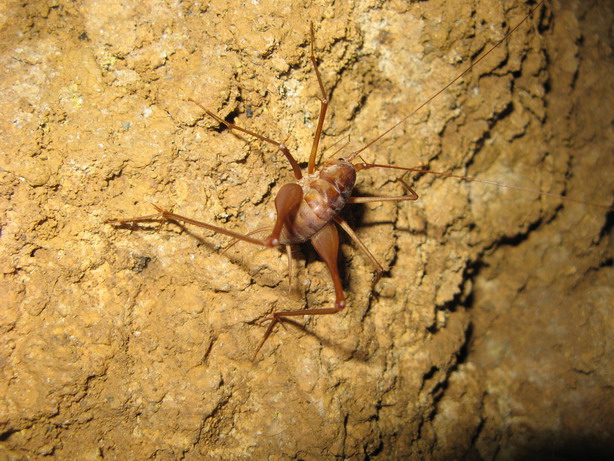
cave cricket


snail

cave crab

cave toad

spider eating long legged centipede
leech feeding on my leg

macaque at Gua Kelam

half a scorpion


beetles mating
Millipedes
ant eating -
Beetle -
Moths


© Liz Price
No reproduction without permission

macaques at Batu Caves

Normally there are lots of macaques at Batu Caves, and the area is well known for them. They are fed by visitors, and often make a nuisance of themselves, by grabbing temple offerings from people, and even snatching bags and cameras etc. They can be quite aggressive and intimidating in their search for food.

So when I went to Batu Caves in June 2010 I was very surprised to see that the macaques had gone. There were none at all at the temple, and only a couple of young ones hanging around at the bottom by Cave Villa. I assumed they had been removed by the authorities and I mentioned this on my website.

My next visit was 7 Aug and the monkeys were back. However there seemed to be less than in the past, and many of them were young ones. So I wondered if this is a new generation that has arrived. Maybe the parents are those that weren't caught earlier.

Needless to say the macaques were still enjoying human food.
biscuit almost as big as the youngster, eating kiwi fruit and biscuit -
mum & baby wanting a handout
eating the jelly from the drink

© Liz Price
No reproduction without permission

7 August 2010

Batu Caves train station 2010

The new Batu Caves train station has opened, and the KTM Komuter route started service on July 29 2010. It connects Batu Caves to Port Klang, via Sentul.

The new station is rather smart. I remember when it was just a field, with a small hut. The only time I used the train in the past was during one Thaipusam -this was the only time that the line was in operation for public trains. It is normally used for the cement cargo industry.

The 7.5 kilometre journey from Sentul to Batu Caves takes 15 minutes. The new route passes through five new stations namely Sentul, Batu Cantonment, Kg Batu, Taman Wahyu and Batu Caves.

The train fare for the Pelabuhan Klang-Sentul route is RM5.80 and an addition of RM1.30 is charged for the direct journey from Sentul to Batu Caves.
Old station sign

© Liz Price
No reproduction without permission

15 July 2010

coffin exhibition, National Museum, KL


This exhibition depicts coffins and burial rituals from southeast Asia. It is at Muzium Negara, the National Musuem in KL, and is held in the exhibition hall until 18 July 2010. Entry is RM2 and you are allowed to take photos. Apparently there is a RM3 camera fee but I wasn't asked for this!


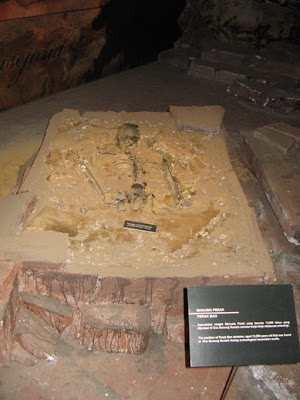
It starts with the archaeological section, with the hall designed to look like a cave with a wooden plank walkway. This was the most interesting for me, as it showed cave burials - Neolithic & Hoabinhian burials from Gua Cha, Perak Man, Niah Cave, etc.


Gua Cha Neolithic
& Hoabinhian


Perak Man, above and below -


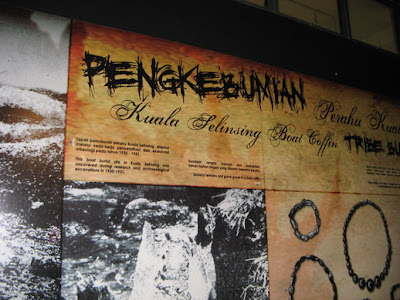
Boat coffins are also featured, such as those from Kuala Selinsing in Perak, and from Niah Caves -


Jar burials started in Neolithic times, and the jars were placed in caves or even in trees. Niah jars -


Stone slab burials have been found from various sites in Perak.


There is a section on burial and funeral customs relating to orang asli - the temiar wrap the body in a mat and carry it in a bamboo cylinder to the burial site. Mah Meri use wooden planks and bamboo coffins.


animal head


Temiar bamboo litter, and Semai & Temiar grave (below)


Bateq place the wrapped corpse in a tree platform.


Mah Meri


The exhibition then turns to the modern ethnic/religious burials. Different Muslim burials are described - generally the Malay community does not use a coffin, except for the east coast coastal regions, as the sandy and marshy areas are not suitable for cavity burials. The coffins are plain with no decoration. There is a hand drawn hearse


Muslim bathing ritual


bamboo litter


Muslim footed wood coffin


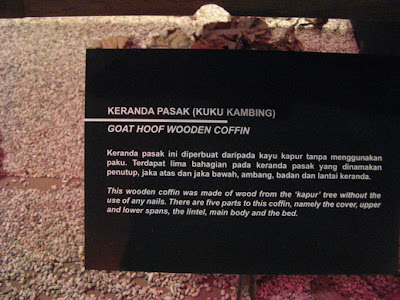
Some Muslim wood coffins -


The Indonesian section shows the buffalo shaped coffins. The notice board also mentioned some with a pig motif, but no example was shown!


buffalo coffins from Indonesia


Coffins from Thailand weren't so well represented, with only a single notice board, with examples of a child's coffin -


Kalimantan Dayak coffin

modern Indian coffin


Hindu and Chinese get a small section, but I don't recall seeing much, if anything on Christian burials. There is a gold plated Chinese coffin.


Different tribes and areas from Borneo are represented, including a log coffin from a Sabah cave, and jar burials. There is an elaborate seladang shaped coffin from Sabah - these coffins have survived quite well as they are made of hard wood such as belian and were stored in caves.


ornate Kelabit coffins

Kelabit jars -


kinabatangan log coffin


Sabah jar -


Philippine burials are represented by a jar and also a rattan chair - the corpse is left to rot on the chair and later the skeleton is stored in a jar. The body fluids are collected in a basket under the chair and are dabbed onto family members for blessing.

Quite an interesting assortment of burials.


© Liz Price


No reproduction without permission