Earth's Natural Wonders - BBC Scotland 2015 (TV series)
Exploring Inhospitable Places. "Series combining photography and human drama to reveal twelve remarkable places, uncovering the stories of people fighting to survive, and even triumph there."
A 6 minute sector featuring birds nest collection.
The narration is misleading, as it only mentions Deer Cave, which is initially shown. But then the rest of the sector is about nest collection in Gomantong, although this isn't mentioned.
Treasure troves accessible only to the very bravest. On the Malaysian island of Borneo, deep in the rain forest lies a hidden wonder. Deer Cave, an epic 168 m wide with a ceiling 220 m high and over 4 km long. A cavern big enough to fly a jumbo jet through. And for centuries Borneo's huge caves have lured men inside to search for treasures they will risk their lives for. Tomorrow morning Jumalee Tubong will enter this wonder. He may not come out alive. "What I do is very risky. But I have to do it. My wife and kids depend on me." For Jumilee and his father, today is the start of a dangerous week. "The cave is terrifying. Dark spirits live there. They take a human life every year." The men seek a great prize. The treasure produced by these birds, tens of thousands of swiftlets. Their nests are woven from solidified saliva and they are the precious ingredient of birds nest soup. In China a single bowl can cost $60. Inside a team erect a web of ropes and ladders. Jumalee will try to climb for nests 100 m above. A part of the cave notorious for accidents. "I'm ready to try. Is it strong enough?" "You mustn't hesitate. Let your body lead you. Slow down, it's swinging." "The man who taught me died falling. So I'm always giving my son advice." Jumalee is only allowed to collect nests for a few weeks a year. So every climb must count. "If you fall it's instant death. The cave's so high. Bodies are smashed beyond recognition. Are you okay? Go slowly now." He's reached a critical point. He needs to switch ladders. "Right leg first. Jumalee! Don't let go yet. That's good." The drop below is now a staggering 90 m. The height of Big Ben. "Okay, you can go." "I'm afraid when I look down. Sometimes I shake with fear. But I make myself do it." This enormous cave was first sculptured by water. But there's another remarkable force at work. The nesting swiftlets. The vertical columns lining the cave walls reveal how over millions of years the acidic droppings of nesting swiftlets and bats have eroded deep channels in the walls making the caves here bigger by an estimated meter every 100,000 years. Some caves have doubled in size as a result. "Go slowly now. As he approaches the top i'm neverous. Your soul hangs by the finest of threads." This time Jumalee has been successful. He has reached a remote corner with a valuable little cluster of nests. But he knows very climb he makes could be his last. And it's the very thing he's risking his life for, the birds nests, that has helped create the challenge in the first place.
Credits - Indonesian Forestry Dept, Sabah Government and Wildlife Dept, Sarawak Government and Tourism Board.
Shown BBC4 in June 2020. Some photos on BBCEarth and reproduced here -
And some photos from the television screen. The first one shows Deer Cave -
Pictorial blogs on some of the interesting caves I have visited around Southeast Asia. On some blogs I have included photos taken over the years.
Although this blog was only born in 2011, I have now included older posts from my Multiply blog which closed in March 2013. This includes articles I have written. I am now also adding news relating to caves I have a particular interest in.
See my website on Caves of Malaysia.
sign in a cave in Laos
Showing posts with label Gomantong Cave. Show all posts
11 June 2020
2 August 2019
Judi Dench visits Gomantong
In July 2019, ITV on English TV showed a 2 part documentary on Dame Judi Dench's visit to Borneo. I wrote about it on my webpage, "Judi Dench's wild Borneo Adventure". In the second part of the programme, there was a few minutes coverage of Judi's visit to Gomantong.
I took some screenshots :
The famous guano pile that every documentary covers
A photo taken from my Gomantong blog, showing the same guano pile
The famous guano pile that every documentary covers
A photo taken from my Gomantong blog, showing the same guano pile
27 January 2017
Gomantong Caves 3D Model fly through
A stunning fly through of Gomantong Caves
Published on Oct 12, 2013
Standard YouTube License
Published on Oct 12, 2013
Standard YouTube License
This work is the preliminary product of an international collaboration of cave scientists which combines state-of-the-art laser scanning with aerial drone photogrammetry. More details at: http://faculty.jsd.claremont.edu/dmcfarlane/Borneo/index.htm
Gomantong Caves 2012 with gatewing and faro 3D scanner
Borneo - survey Gomantong Caves 2012 with gatewing and faro 3D scanner
https://www.youtube.com/watch?v=FIaoWjeH7TM&feature=player_detailpage#t=340
Gomantong Caves in Borneo, overview of the 3D scan reconstruction
https://www.youtube.com/watch?v=eVhPadSFZ-U
12 November 2015
Gomantong bugs on video
Interesting piece with a video on the cockroaches and other bugs at Gomantong Cave, Sabah, See International Business Times UK, 31 Oct 2015. Donald McFarlane has been doing research there.
31 July 2011
Gomantong Caves, Sabah
Gomantong Caves in Sabah are famous for the birds nest collection, as well as the sheer size of the caves.
I wrote an article on Gomantong Caves for The Brunei Times in 2007, Gomantong bat caves awash in guano.
Entrance to the lower cave.
A boardwalk is in place around the area where tourists go.
View of the back of the cave
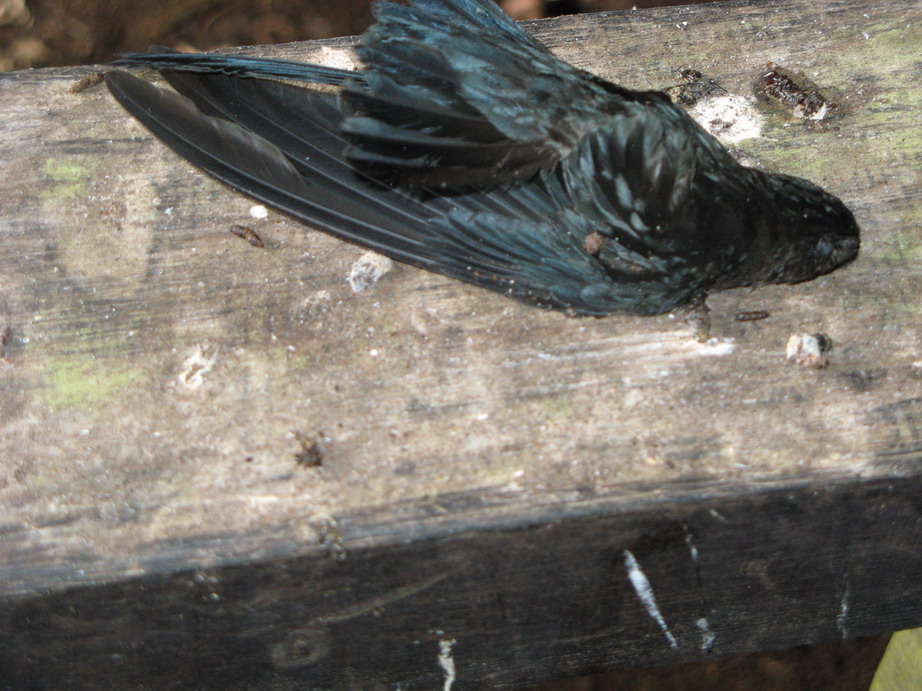
swiftlet and a skeleton
Houses for the nest collectors
and coiled ladders
It is estimated that between 600,000 and two million bats live in the cave. With each bat eating its own body weight in insects each night, this results in several tonnes of insects being consumed per night.
Some of the invertebrates that feed on guano
long legged centipedes
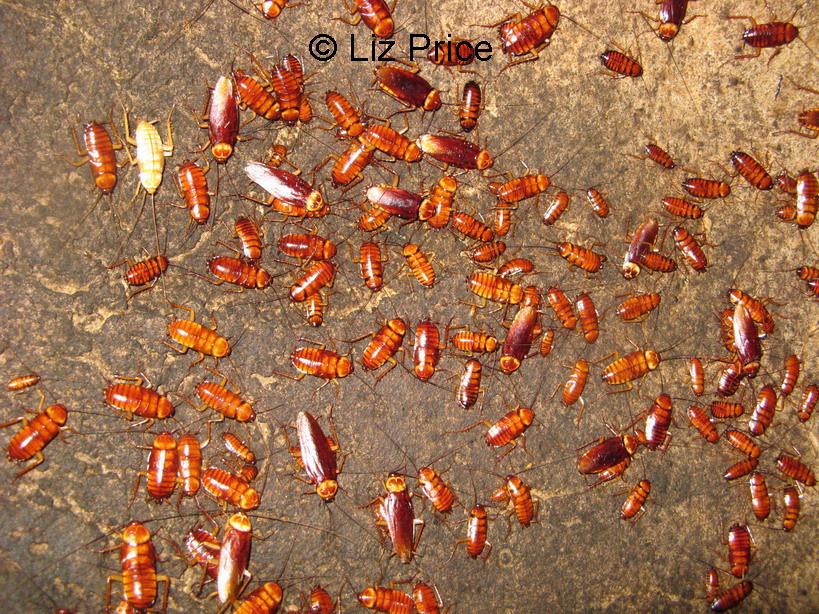
cockroaches
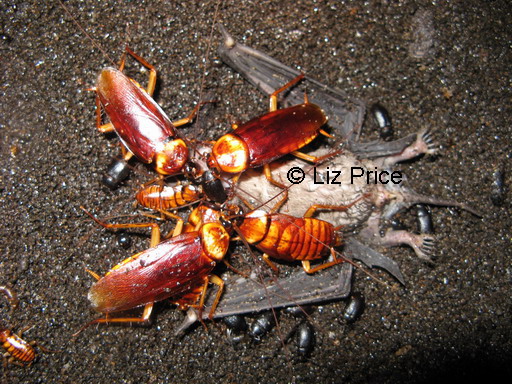
Dead bat being eaten by cockroaches
Back entrance
and front entrance
Guano mountain made famous by David Attenbourough
© Liz Price
No reproduction without permission
I wrote an article on Gomantong Caves for The Brunei Times in 2007, Gomantong bat caves awash in guano.
Entrance to the lower cave.
A boardwalk is in place around the area where tourists go.
View of the back of the cave
swiftlet and a skeleton
Houses for the nest collectors
and coiled ladders
It is estimated that between 600,000 and two million bats live in the cave. With each bat eating its own body weight in insects each night, this results in several tonnes of insects being consumed per night.
Some of the invertebrates that feed on guano
long legged centipedes
cockroaches
Dead bat being eaten by cockroaches
Back entrance
and front entrance
Guano mountain made famous by David Attenbourough
© Liz Price
No reproduction without permission
Labels:
bats,
cave fauna,
Gomantong Cave,
Malaysia,
Sabah,
swiftlet
18 January 2009
18 July 2008
Gomantong bat caves - in WildAsia
Gomantong bat caves awash in guano


Pagan burials, birds nests and, of course, bats intrigue LIZ PRICE as she pays a visit to the Gomantong Caves in Sabah, Malaysia.
[Published on Wildasia published 7 Jan 2008]
IN FRONT of me was a high mountain of bat guano, made famous by the world famous naturalist, David Attenborough in one of his TV documentaries. This mountain of waste deposit has been formed over the years by the caves inhabitants, the wrinkle-lipped bats. It is estimated that between 600,000 and two million of these flying mammals live in the cave. Each night they leave the cave to feed, and with each bat eating its own body weight in insects each night, this results in several tonnes of insects being consumed per night. No need for chemical insecticides here.
The bats share their dark home with cave swiftlets, and it is these birds which have made the caves famous, due to the harvesting of their nests. The Gomantong Caves have long been known for their birds' nests. Birds' nests, a Chinese delicacy, have been sought for centuries in various caves not merely in North Borneo but in Sarawak and other parts of South-East Asia as well. The greatest single source for these birds' nests has remained the Gomantong Caves. The caves are 32km south of Sandakan, near to the Kinabatangan River on the east coast of Sabah.
There are two main caves, Simud Putih and Simud Hitam. The names refer to the principal types of edible birds' nests produced in each cave, white and black respectively. These limestone caves are about 65 million years old. Although the caves have been known for centuries as a source of birds' nests, the date of discovery of the caves is not really known.
The birds' nest trade probably started around the early 15th century. The Chinese admiral Cheng Ho, a Muslim, commanded a great fleet and supposedly visited Sabah on route to the Philippines in 1406. Around the same time, according to Idahan folklore, an Arab missionary Machdom, known as Alawlia (holy man), came to Sabah's east coast with a trading vessel in 1408. Following this visit, local people began to trade in birds' nests. The Chinese bought the nests and trade flourished. Nests were often exchanged for glass beads, brass, gold and iron, textiles, Chinese stone wares and porcelains.
With the arrival of the first Muslim missionaries, many people converted to Islam. But many resisted, and the east coast caves were important places for spirit activity as burial places for the pagan people. Cave burials took place and the locals treasured the caves as their ancestral burial grounds. In the small, isolated caves not containing edible nests, these customs survived into this century. Unfortunately, few caves with burial remains survived undisturbed over the centuries. In the caves economically important for nests, the hardwood coffins, ceramic and earthenware jars and pots became debris over the years, as well as being removed by the casual visitor. In Gomantong nest collectors built villages right over ancient burial grounds. As people became Muslims, they gave up their pagan customs.
Gomantong Caves were investigated by J H Allard of the China Borneo Company in 1889 for phosphate deposits as a source of fertiliser. The caves were mapped in 1930. Today access to the caves is considerably easier than in the early days, when in 1887 the journey was described as "a long tramp through dense jungle". Today a road leads right to the park headquarters and from there a short walk of just a few minutes brings you to Gomantong hill. Much of the virgin jungle has been replaced by secondary jungle, oil palm and cocoa plantations. But the tall menggaris trees have been left as they are said to be homes for spirits, and are also nesting places for honey bees.
In front of the main entrance to Simud Hitam are the buildings used by the bird nest collectors. The harvesting of nests is strictly controlled and limited to twice a year by licensed collectors. A boardwalk leads into the large gaping entrance to the cave and all around is the twitter of swiftlets as they go about their daily lives. The boardwalk follows the cave walls and in the centre of the chamber is thousands of years of accumulated guano.
Looking closely at the guano I could see it was alive with a whole collection of invertebrates. There were cockroaches, beetles and lots of other insects, all playing a role in the cave's food chain. The cockroaches had made the cave walls their home and in some places, sections of the walls were absolutely covered with them.
Occasionally we were able to get a close up view of a swiftlet which was lying on the handrail or floor. The birds which inhabit the caves and make the edible nests are swiftlets of the Collocalia family, locally called layang layang because of their constant movement. The black and white nests are made by different types of swiftlet. The white nests are made purely of saliva, and are much more valuable and costly than the black nests which have feathers in them. The saliva is produced from a tough, glutinous, translucent substance secreted by the salivary glands.
Most of the swiftlets build their nests high up on the cave walls. The nests look like half a saucer, about three inches long, one and a half inches wide and about half an inch deep. They are firm but springy to the touch. The bigger and thicker they are, the better. As they get old, they become drier and tighten and increase in value.
Collection has been carried out for centuries. The right to collect from certain areas in the cave is based on hereditary rights which are still practiced today. Both black and white nests are found in the dark corners of caves, but the black nests are in areas where light penetrates, generally in immense lofty caverns. White nests are found in truly dark crevices, in low roofed caves.
To reach the nests, rotan ladders with hardwood rungs are hung from the ceiling, held tautly to belian wood. Surplus lengths of rope are coiled up at the bottom. At the top of the ladder, the man ties himself to the bamboo and rotan loops fixed to the ladder. His candle is fixed to a bamboo pole. Nests are scraped from the wall and put into a basket hung on the ladder. During collection numerous small birds and eggs fall. Today bamboo ladders are also used. In some places the roof may be up to 90m high. Although I didn't actually see any men working as it was out of season, it was quite scary just looking at these ladders and thinking how the men work so high above the floor without any safety line.
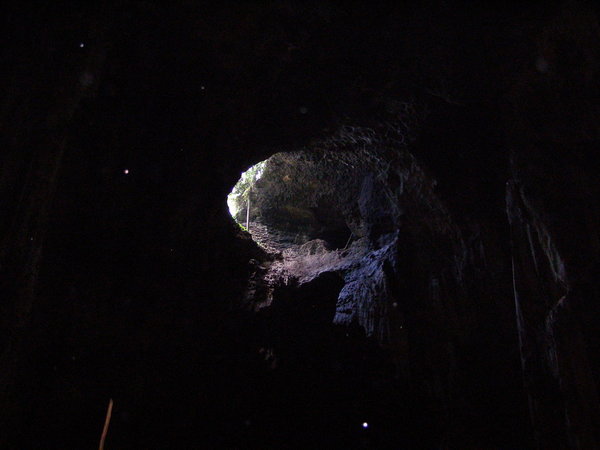
At the back of the main chamber is a large hole open to the sky which let in a lot of daylight. Simud Putih cave is located high above this entrance.
Leaving the boardwalk I detoured to see Attenborough's guano mountain. I climbed a rocky slope made slippery by the guano, careful not to tread on dying swiftlets and bats which were floundering around on the floor. As the slope leveled out I looked up and there it was, a mountain of guano, maybe 30m high, reaching up in front of me. I felt quite humbled having seen it for myself, something most people would only see on television. As I looked around, listening to the sounds of the bats and swiftlets and dropping water, I felt so small standing in this immense dark chamber. Gomantong Caves is a truly spectacular place.
© Liz Price - article may only be republished with the author's permission.

Pagan burials, birds nests and, of course, bats intrigue LIZ PRICE as she pays a visit to the Gomantong Caves in Sabah, Malaysia.
[Published on Wildasia published 7 Jan 2008]
IN FRONT of me was a high mountain of bat guano, made famous by the world famous naturalist, David Attenborough in one of his TV documentaries. This mountain of waste deposit has been formed over the years by the caves inhabitants, the wrinkle-lipped bats. It is estimated that between 600,000 and two million of these flying mammals live in the cave. Each night they leave the cave to feed, and with each bat eating its own body weight in insects each night, this results in several tonnes of insects being consumed per night. No need for chemical insecticides here.
The bats share their dark home with cave swiftlets, and it is these birds which have made the caves famous, due to the harvesting of their nests. The Gomantong Caves have long been known for their birds' nests. Birds' nests, a Chinese delicacy, have been sought for centuries in various caves not merely in North Borneo but in Sarawak and other parts of South-East Asia as well. The greatest single source for these birds' nests has remained the Gomantong Caves. The caves are 32km south of Sandakan, near to the Kinabatangan River on the east coast of Sabah.
There are two main caves, Simud Putih and Simud Hitam. The names refer to the principal types of edible birds' nests produced in each cave, white and black respectively. These limestone caves are about 65 million years old. Although the caves have been known for centuries as a source of birds' nests, the date of discovery of the caves is not really known.
The birds' nest trade probably started around the early 15th century. The Chinese admiral Cheng Ho, a Muslim, commanded a great fleet and supposedly visited Sabah on route to the Philippines in 1406. Around the same time, according to Idahan folklore, an Arab missionary Machdom, known as Alawlia (holy man), came to Sabah's east coast with a trading vessel in 1408. Following this visit, local people began to trade in birds' nests. The Chinese bought the nests and trade flourished. Nests were often exchanged for glass beads, brass, gold and iron, textiles, Chinese stone wares and porcelains.
With the arrival of the first Muslim missionaries, many people converted to Islam. But many resisted, and the east coast caves were important places for spirit activity as burial places for the pagan people. Cave burials took place and the locals treasured the caves as their ancestral burial grounds. In the small, isolated caves not containing edible nests, these customs survived into this century. Unfortunately, few caves with burial remains survived undisturbed over the centuries. In the caves economically important for nests, the hardwood coffins, ceramic and earthenware jars and pots became debris over the years, as well as being removed by the casual visitor. In Gomantong nest collectors built villages right over ancient burial grounds. As people became Muslims, they gave up their pagan customs.
Gomantong Caves were investigated by J H Allard of the China Borneo Company in 1889 for phosphate deposits as a source of fertiliser. The caves were mapped in 1930. Today access to the caves is considerably easier than in the early days, when in 1887 the journey was described as "a long tramp through dense jungle". Today a road leads right to the park headquarters and from there a short walk of just a few minutes brings you to Gomantong hill. Much of the virgin jungle has been replaced by secondary jungle, oil palm and cocoa plantations. But the tall menggaris trees have been left as they are said to be homes for spirits, and are also nesting places for honey bees.
In front of the main entrance to Simud Hitam are the buildings used by the bird nest collectors. The harvesting of nests is strictly controlled and limited to twice a year by licensed collectors. A boardwalk leads into the large gaping entrance to the cave and all around is the twitter of swiftlets as they go about their daily lives. The boardwalk follows the cave walls and in the centre of the chamber is thousands of years of accumulated guano.
Looking closely at the guano I could see it was alive with a whole collection of invertebrates. There were cockroaches, beetles and lots of other insects, all playing a role in the cave's food chain. The cockroaches had made the cave walls their home and in some places, sections of the walls were absolutely covered with them.
Occasionally we were able to get a close up view of a swiftlet which was lying on the handrail or floor. The birds which inhabit the caves and make the edible nests are swiftlets of the Collocalia family, locally called layang layang because of their constant movement. The black and white nests are made by different types of swiftlet. The white nests are made purely of saliva, and are much more valuable and costly than the black nests which have feathers in them. The saliva is produced from a tough, glutinous, translucent substance secreted by the salivary glands.
Most of the swiftlets build their nests high up on the cave walls. The nests look like half a saucer, about three inches long, one and a half inches wide and about half an inch deep. They are firm but springy to the touch. The bigger and thicker they are, the better. As they get old, they become drier and tighten and increase in value.
Collection has been carried out for centuries. The right to collect from certain areas in the cave is based on hereditary rights which are still practiced today. Both black and white nests are found in the dark corners of caves, but the black nests are in areas where light penetrates, generally in immense lofty caverns. White nests are found in truly dark crevices, in low roofed caves.
To reach the nests, rotan ladders with hardwood rungs are hung from the ceiling, held tautly to belian wood. Surplus lengths of rope are coiled up at the bottom. At the top of the ladder, the man ties himself to the bamboo and rotan loops fixed to the ladder. His candle is fixed to a bamboo pole. Nests are scraped from the wall and put into a basket hung on the ladder. During collection numerous small birds and eggs fall. Today bamboo ladders are also used. In some places the roof may be up to 90m high. Although I didn't actually see any men working as it was out of season, it was quite scary just looking at these ladders and thinking how the men work so high above the floor without any safety line.
At the back of the main chamber is a large hole open to the sky which let in a lot of daylight. Simud Putih cave is located high above this entrance.
Leaving the boardwalk I detoured to see Attenborough's guano mountain. I climbed a rocky slope made slippery by the guano, careful not to tread on dying swiftlets and bats which were floundering around on the floor. As the slope leveled out I looked up and there it was, a mountain of guano, maybe 30m high, reaching up in front of me. I felt quite humbled having seen it for myself, something most people would only see on television. As I looked around, listening to the sounds of the bats and swiftlets and dropping water, I felt so small standing in this immense dark chamber. Gomantong Caves is a truly spectacular place.
© Liz Price - article may only be republished with the author's permission.
26 December 2007
Gomantong Caves in Sabah - The Brunei Times
http://www.bt.com.bn/en/en/travel/2007/12/02/gomantong_bat_caves_awash_in_guano
Gomantong bat caves awash in guano

Bat waste: A visitor standing on a millenary mountain of guano in Gomantong (Bottom). It is estimated that between 600,000 and two million bats live in the cave. With each bat eating its own body weight in insects each night, this results in several tonnes of insects being consumed per night. Pictures: Liz Price
Liz Price
GOMANTONG, SABAH
GOMANTONG, SABAH
Sunday, December 2, 2007
IN FRONT of me was a high mountain of bat guano, made famous by the world famous naturalist, David Attenborough in one of his TV documentaries. This mountain of waste deposit has been formed over the years by the caves inhabitants, the wrinkle-lipped bats. It is estimated that between 600,000 and two million of these flying mammals live in the cave. Each night they leave the cave to feed, and with each bat eating its own body weight in insects each night, this results in several tonnes of insects being consumed per night. No need for chemical insecticides here.
The bats share their dark home with cave swiftlets, and it is these birds which have made the caves famous, due to the harvesting of their nests. The Gomantong Caves have long been known for their birds' nests. Birds' nests, a Chinese delicacy, have been sought for centuries in various caves not merely in North Borneo but in Sarawak and other parts of South-East Asia as well. The greatest single source for these birds' nests has remained the Gomantong Caves. The caves are 32km south of Sandakan, near to the Kinabatangan River on the east coast of Sabah.
There are two main caves, Simud Putih and Simud Hitam. The names refer to the principal types of edible birds' nests produced in each cave, white and black respectively. These limestone caves are about 65 million years old. Although the caves have been known for centuries as a source of birds' nests, the date of discovery of the caves is not really known.
The birds' nest trade probably started around the early 15th century. The Chinese admiral Cheng Ho, a Muslim, commanded a great fleet and supposedly visited Sabah on route to the Philippines in 1406. Around the same time, according to Idahan folklore, an Arab missionary Machdom, known as Alawlia (holy man), came to Sabah's east coast with a trading vessel in 1408. Following this visit, local people began to trade in birds' nests. The Chinese bought the nests and trade flourished. Nests were often exchanged for glass beads, brass, gold and iron, textiles, Chinese stone wares and porcelains.
With the arrival of the first Muslim missionaries, many people converted to Islam. But many resisted, and the east coast caves were important places for spirit activity as burial places for the pagan people. Cave burials took place and the locals treasured the caves as their ancestral burial grounds. In the small, isolated caves not containing edible nests, these customs survived into this century. Unfortunately, few caves with burial remains survived undisturbed over the centuries. In the caves economically important for nests, the hardwood coffins, ceramic and earthenware jars and pots became debris over the years, as well as being removed by the casual visitor. In Gomantong nest collectors built villages right over ancient burial grounds. As people became Muslims, they gave up their pagan customs.
!Gomantong Caves were investigated by J H Allard of the China Borneo Company in 1889 for phosphate deposits as a source of fertiliser. The caves were mapped in 1930. Today access to the caves is considerably easier than in the early days, when in 1887 the journey was described as "a long tramp through dense jungle". Today a road leads right to the park headquarters and from there a short walk of just a few minutes brings you to Gomantong hill. Much of the virgin jungle has been replaced by secondary jungle, oil palm and cocoa plantations. But the tall menggaris trees have been left as they are said to be homes for spirits, and are also nesting places for honey bees.
!In front of the main entrance to Simud Hitam are the buildings used by the bird nest collectors. The harvesting of nests is strictly controlled and limited to twice a year by licensed collectors. A boardwalk leads into the large gaping entrance to the cave and all around is the twitter of swiftest as they go about their daily lives. The boardwalk follows the cave walls and in the centre of the chamber is thousands of years of accumulated guano.
!Looking closely at the guano I could see it was alive with a whole collection of invertebrates. There were cockroaches, beetles and lots of other insects, all playing a role in the cave's food chain. The cockroaches had made the cave walls their home and in some places, sections of the walls were absolutely covered with them.
!Occasionally we were able to get a close up view of a swiftlet which was lying on the handrail or floor. The birds which inhabit the caves and make the edible nests are swiftlets of the Collocalia family, locally called layang layang because of their constant movement. The black and white nests are made by different types of swiftlet. The white nests are made purely of saliva, and are much more valuable and costly than the black nests which have feathers in them. The saliva is produced from a tough, glutinous, translucent substance secreted by the salivary glands.
!Most of the swiftlets build their nests high up on the cave walls. The nests look like half a saucer, about three inches long, one and a half inches wide and about half an inch deep. They are firm but springy to the touch. The bigger and thicker they are, the better. As they get old, they become drier and tighten and increase in value.
Collection has been carried out for centuries. The right to collect from certain areas in the cave is based on hereditary rights which are still practiced today. Both black and white nests are found in the dark corners of caves, but the black nests are in areas where light penetrates, generally in immense lofty caverns. White nests are found in truly dark crevices, in low roofed caves.
To reach the nests, rotan ladders with hardwood rungs are hung from the ceiling, held tautly to belian wood. Surplus lengths of rope are coiled up at the bottom. At the top of the ladder, the man ties himself to the bamboo and rotan loops fixed to the ladder. His candle is fixed to a bamboo pole. Nests are scraped from the wall and put into a basket hung on the ladder. During collection numerous small birds and eggs fall. Today bamboo ladders are also used. In some places the roof may be up to 90m high. Although I didn't actually see any men working as it was out of season, it was quite scary just looking at these ladders and thinking how the men work so high above the floor without any safety line.
!At the back of the main chamber is a large hole open to the sky which let in a lot of daylight. Simud Putih cave is located high above this entrance.
Leaving the boardwalk I detoured to see Attenborough's guano mountain. I climbed a rocky slope made slippery by the guano, careful not to tread on dying swiftlets and bats which were floundering around on the floor. As the slope leveled out I looked up and there it was, a mountain of guano, maybe 30m high, reaching up in front of me. I felt quite humbled having seen it for myself, something most people would only see on television. As I looked around, listening to the sounds of the bats and swiftlets and dropping water, I felt so small standing in this immense dark chamber. Gomantong Caves is a truly spectacular place.The Brunei Times
The bats share their dark home with cave swiftlets, and it is these birds which have made the caves famous, due to the harvesting of their nests. The Gomantong Caves have long been known for their birds' nests. Birds' nests, a Chinese delicacy, have been sought for centuries in various caves not merely in North Borneo but in Sarawak and other parts of South-East Asia as well. The greatest single source for these birds' nests has remained the Gomantong Caves. The caves are 32km south of Sandakan, near to the Kinabatangan River on the east coast of Sabah.
There are two main caves, Simud Putih and Simud Hitam. The names refer to the principal types of edible birds' nests produced in each cave, white and black respectively. These limestone caves are about 65 million years old. Although the caves have been known for centuries as a source of birds' nests, the date of discovery of the caves is not really known.
The birds' nest trade probably started around the early 15th century. The Chinese admiral Cheng Ho, a Muslim, commanded a great fleet and supposedly visited Sabah on route to the Philippines in 1406. Around the same time, according to Idahan folklore, an Arab missionary Machdom, known as Alawlia (holy man), came to Sabah's east coast with a trading vessel in 1408. Following this visit, local people began to trade in birds' nests. The Chinese bought the nests and trade flourished. Nests were often exchanged for glass beads, brass, gold and iron, textiles, Chinese stone wares and porcelains.
With the arrival of the first Muslim missionaries, many people converted to Islam. But many resisted, and the east coast caves were important places for spirit activity as burial places for the pagan people. Cave burials took place and the locals treasured the caves as their ancestral burial grounds. In the small, isolated caves not containing edible nests, these customs survived into this century. Unfortunately, few caves with burial remains survived undisturbed over the centuries. In the caves economically important for nests, the hardwood coffins, ceramic and earthenware jars and pots became debris over the years, as well as being removed by the casual visitor. In Gomantong nest collectors built villages right over ancient burial grounds. As people became Muslims, they gave up their pagan customs.
!Gomantong Caves were investigated by J H Allard of the China Borneo Company in 1889 for phosphate deposits as a source of fertiliser. The caves were mapped in 1930. Today access to the caves is considerably easier than in the early days, when in 1887 the journey was described as "a long tramp through dense jungle". Today a road leads right to the park headquarters and from there a short walk of just a few minutes brings you to Gomantong hill. Much of the virgin jungle has been replaced by secondary jungle, oil palm and cocoa plantations. But the tall menggaris trees have been left as they are said to be homes for spirits, and are also nesting places for honey bees.
!In front of the main entrance to Simud Hitam are the buildings used by the bird nest collectors. The harvesting of nests is strictly controlled and limited to twice a year by licensed collectors. A boardwalk leads into the large gaping entrance to the cave and all around is the twitter of swiftest as they go about their daily lives. The boardwalk follows the cave walls and in the centre of the chamber is thousands of years of accumulated guano.
!Looking closely at the guano I could see it was alive with a whole collection of invertebrates. There were cockroaches, beetles and lots of other insects, all playing a role in the cave's food chain. The cockroaches had made the cave walls their home and in some places, sections of the walls were absolutely covered with them.
!Occasionally we were able to get a close up view of a swiftlet which was lying on the handrail or floor. The birds which inhabit the caves and make the edible nests are swiftlets of the Collocalia family, locally called layang layang because of their constant movement. The black and white nests are made by different types of swiftlet. The white nests are made purely of saliva, and are much more valuable and costly than the black nests which have feathers in them. The saliva is produced from a tough, glutinous, translucent substance secreted by the salivary glands.
!Most of the swiftlets build their nests high up on the cave walls. The nests look like half a saucer, about three inches long, one and a half inches wide and about half an inch deep. They are firm but springy to the touch. The bigger and thicker they are, the better. As they get old, they become drier and tighten and increase in value.
Collection has been carried out for centuries. The right to collect from certain areas in the cave is based on hereditary rights which are still practiced today. Both black and white nests are found in the dark corners of caves, but the black nests are in areas where light penetrates, generally in immense lofty caverns. White nests are found in truly dark crevices, in low roofed caves.
To reach the nests, rotan ladders with hardwood rungs are hung from the ceiling, held tautly to belian wood. Surplus lengths of rope are coiled up at the bottom. At the top of the ladder, the man ties himself to the bamboo and rotan loops fixed to the ladder. His candle is fixed to a bamboo pole. Nests are scraped from the wall and put into a basket hung on the ladder. During collection numerous small birds and eggs fall. Today bamboo ladders are also used. In some places the roof may be up to 90m high. Although I didn't actually see any men working as it was out of season, it was quite scary just looking at these ladders and thinking how the men work so high above the floor without any safety line.
!At the back of the main chamber is a large hole open to the sky which let in a lot of daylight. Simud Putih cave is located high above this entrance.
Leaving the boardwalk I detoured to see Attenborough's guano mountain. I climbed a rocky slope made slippery by the guano, careful not to tread on dying swiftlets and bats which were floundering around on the floor. As the slope leveled out I looked up and there it was, a mountain of guano, maybe 30m high, reaching up in front of me. I felt quite humbled having seen it for myself, something most people would only see on television. As I looked around, listening to the sounds of the bats and swiftlets and dropping water, I felt so small standing in this immense dark chamber. Gomantong Caves is a truly spectacular place.The Brunei Times
30 October 2007
Gomantong Cave photos
Gomantong Caves in Sabah are famous for the birds nest collection, as well as the sheer size of the caves.
entrance
swiftlet
swiftlet eaten by cockroaches
guano
walking in guano
house
![]() |
| back entrance |
guano mountain made famous by David Attenborough
looking to main entrance
cockroach eating bat © Liz Price
No reproduction without permission
Labels:
bats,
cave fauna,
Gomantong Cave,
guano,
Malaysia,
Sabah,
swiftlet
Subscribe to:
Posts (Atom)