Tony Whitten tragically died in a road traffic accident in Dec 2017. In March 2020 the Raffles Bulletin of Zoology produced a memorial issue dedicated to Tony, Supplement No 35. See more on my website.
Tony was very actively involved with trying to protect Gunung Kanthan from quarrying, see this blog. The hill and caves are home to the endemic Liphiustius kanthan.
Some relevant articles in the RBZ special issue :
BROWNE, Stephen (2020) Foreward. RBZ, Supplement No. 35: pp v-vi.
This has an interesting piece about Tony and Liphistius kanthan.
LIEW, Thor-Seng & CLEMENTS, Gopalasamy Reuben (2020) Whittenia, a new genus of land snails from Perak, Peninsular Malaysia (Gastropoda: Diplommatinidae). RBZ, Supplement No. 35: 143–148.
"This paper proposes a new genus, Whittenia, for a group of irregularly coiled land snail species hitherto placed in the genus Opisthostoma. Whittenia differs from congeners in Diplommatinidae based on both molecular phylogeny and shell morphology. We reassign two previously described species (Opisthostoma vermiculum and O. gittenbergeri) to Whittenia. Both species are endemic to the limestone karsts of Kinta Valley in Perak, Peninsular Malaysia."
This genus is named after Tony Whitten.
ANON (2020) The Tony Whitten conservation prize. RBZ, Supplement No. 35: pp 15–16.
One recipient of a prize was Junn Kitt Foon, for his work on conservation and taxonomy of land snails in Malaysia. Tony had a particular interest in snails.
FOON, Junn Kitt & MOHAMMAD Effendi Marzuki (2020) Two new species of land snails of the genus Rahula from Peninsular Malaysia (Gastropoda: Euconulidae). RBZ, Supplement No. 35: 137–142.
This paper describes 2 new snail species, one of which is named after Tony, Rahula tonywhitteni .
--
Malaysian taxa named for Tony Whitten , RBZ, Supplement No. 35: p 9 :
Plectostoma whitteni Liew, Vermeulen, Marzuki, & Schilthuizen, 2014: 63 (a micro-landsnail from
Malaysia)
Rahula tonywhitteni Foon & Marzuki, 2020: 141 (a land snail from Malaysia)
Whittenia Liew & Clements, 2020: 144 (a land snail from Malaysia)
--
See more on my website, on Archives 2020.

sign in a cave in Laos
Showing posts with label liphistius. Show all posts
Showing posts with label liphistius. Show all posts
3 April 2020

23 November 2017
New Liphistius spider L. priceae named after me
I am honoured to have a new species of Liphistius spider named after me in 2017. The trapdoor spider, Liphistius priceae sp. nov. has recently been described in a new paper, Revue suisse de Zoologie (September 2017) 124(2): 391-445, A revision of the trapdoor spider genus Liphistius (Mesothelae: Liphistiidae) in peninsular Malaysia; part 1, by Peter J. Schwendinger.
There are 5 species groups of Liphistius in peninsular Malaysia : the trang group, the malayanus-group, the batuensis-group, the tioman-group and the linang-group. L. priceae sp. nov. belongs to the linang-group.
The specimens were collected by Dr Peter Schwendinger. They are known only from two caves in the
same limestone hill at Dabong in Kelantan - Gua Keris and Gua Pagar. None were found in the associated rain forest so they may be confined to caves, although show no noteworthy cave adaptations.
Unfortunately there are no photo of the live specimens, only those in alcohol -


There are 5 species groups of Liphistius in peninsular Malaysia : the trang group, the malayanus-group, the batuensis-group, the tioman-group and the linang-group. L. priceae sp. nov. belongs to the linang-group.
The specimens were collected by Dr Peter Schwendinger. They are known only from two caves in the
same limestone hill at Dabong in Kelantan - Gua Keris and Gua Pagar. None were found in the associated rain forest so they may be confined to caves, although show no noteworthy cave adaptations.
Unfortunately there are no photo of the live specimens, only those in alcohol -


Extracts from the paper :
(Location):
Malaysia, Kelantan, about 5 km
S of Dabong, Gua Keris (= Kris Cave) and Gua Pagar
(locally also called Gua King Kong), 130 m; 8.-9.
VI.2004; leg. P.J. Schwendinger. The precise type
locality is Gua Keris.
Etymology:
The new species is named in honour of
Liz Price (London, UK), a former long-time resident
in Kuala Lumpur, and a very active speleologist who
over 30 years explored and published on caves and cave
faunas all over Southeast Asia. She was also involved
in conservation and trying to save some caves from
destruction by quarrying in Malaysia.
Diagnosis:
Small to medium-sized, light-brown coloured
species, similar and closely related to
L. tempurung. Both sexes slightly smaller than those
of L. tempurung.
This is the second specimen to have been named after me. The first was a snail from Laos, called Sinoennea lizae .
A big thank you to Peter Schwendinger for honouring me with this cave spider.


8 February 2014
Gunung Kanthan 2014 media & www reports
In 2013 I made several posts about Gunung Kanthan and Gua Kanthan in Perak, Malaysia. This important hill and cave system are in danger of being quarried by Lafarge. The hill is important as it is home to several rare species of flora and fauna, and Gua Kanthan is a large cave with endemic cave fauna. There are other caves on the hill as well as several temples. See the posts by looking for keywords (Kanthan gua, Kanthan gunung, Lafarge, quarry, liphistius) in the 'labels' in the column on the right of the page.
One blog from Sept 2013 listed various web sites and media reports relating to Kanthan, see the blog here. For 2014, I will now continue this list here...............
The Star, 8 Feb 2014
Cement plant staff spruces up octogenarian's home
The Star, 8 Feb 2014
New flora and fauna species found
AsiaOne 8 Feb 2014 (reprinted from The Star)
New flora and fauna species found in Malaysia
WildSingapore blog , 8 Feb 2014 (taken from The Star)
Malaysia: new flora and fauna species found
The Star, 8 Feb 2014
Perak hills open to destruction, say experts
The Star, 9 Feb 2014
Conserve rest of Gunung Kanthan
The GreenReporter blog , 11 Feb 2014
(reprint of The Star 8 Feb)
The Star, 2 March 2014
FRIM comes under threat
(Among the media recognised by FRIM were The Star journalists Tan Cheng Li and Isabelle Lai for their respective reports last year on Merapoh, Pahang, and Gunung Kanthan, Perak)
The Star, 5 May 2014
Illegal use of limestone caves must be stopped, says Dr Zambry
(This rather one sided article was the result of a meeting with Lafarge and the Perak MB on 30 Apr)
Oriental Daily, 27 May 2014
Half year of research, endangered species found in Gunung Kanthan
Oriental Daily , 7 July 2014
(400 million years old Gunung Kanthan rare species found)
Sinar Harian , 28 May 2014
Jumpa spesies flora, fauna Gunung Kanthan
New Straits Times , 29 May 2014
Rare finds at Gunung Kanthan
The Star , 29 May 2014
‘Preserve all of Gunung Kanthan’
MNS blog 6 Jan 2014
Save Gunung Kanthan
Mongabay , 24 Aug 2014
Scientists name new endangered species after the company that will decide its fate
The Guardian , UK , 25 Aug 2014
A tiny, rare snail in Malaysia has big consequences for global cement giant
The Epoch Times, 26 Aug,
"Tiny Endangered Snail Named for Company".
CemNet.com 27 Aug,
"New species of snail discovered in Lafarge Malaysia limestone quarry".
Global Cement on 28 Aug,
"Future of Charopa lafargei snail in hands of Lafarge Malaysia".
Espandar Cement News ,
"Future of Charopa lafargei snail in hands of Lafarge Malaysia".
Novataxa BlogSpot on 24 Aug,
"[Mollusca • 2014] ‘Charopa’ lafargei • A New, presumed narrowly Endemic Species (Gastropoda, Pulmonata, Charopidae) from Peninsular Malaysia".
The Star , 30 Aug 2014
New snail species found
Ipoh Echo, No 197, 16-30 Sept
New Snail Species Discovered In Kinta Valley Phytotaxa 177 (3) 29 Aug 2014
Three new species from Gunung Kanthan, a limestone tower karst in Perak, Malaysia.
Global Trees (Sept 2014)
Vatica kanthanensis
Malay Mail, 2 Sept
In Ipoh, rare snail named after cement giant is safe, says French quarry company
The Star , 12 Sept 2014
Bloom is of a new species of plant discovered on Gunung Kanthan
Descent , Oct/Nov 2014 , No 240
Snail slows quarrying
The Guardian , 17 Nov 2014
IUCNred list of endangered species. Red List: the world's most threatened species –interactive.
More than 22,000 species feature in conservationists’ ‘under threat’ list.
My blog page
The Guardian , 17 Nov 2014
Cement company blows up limestone hill and renders snail extinct
The Star , 22 Nov 2014
A Malaysian snail goes extinct with 22,000+ other species on the brink
The Star , 22 Dec 2014
Going, going, gone: Malaysia's wildlife loses battle against extinction
The Star , 30 Dec 2014
TheYearThatWas: Distressing environmental issues in Malaysia in 2014
Mongabay , 20 Dec 2014
Pictures: the top new animal discoveries of 2014 [Kanthan snail]
One blog from Sept 2013 listed various web sites and media reports relating to Kanthan, see the blog here. For 2014, I will now continue this list here...............
The Star, 8 Feb 2014
Cement plant staff spruces up octogenarian's home
The Star, 8 Feb 2014
New flora and fauna species found
AsiaOne 8 Feb 2014 (reprinted from The Star)
New flora and fauna species found in Malaysia
WildSingapore blog , 8 Feb 2014 (taken from The Star)
Malaysia: new flora and fauna species found
The Star, 8 Feb 2014
Perak hills open to destruction, say experts
The Star, 9 Feb 2014
Conserve rest of Gunung Kanthan
The GreenReporter blog , 11 Feb 2014
(reprint of The Star 8 Feb)
The Star, 2 March 2014
FRIM comes under threat
(Among the media recognised by FRIM were The Star journalists Tan Cheng Li and Isabelle Lai for their respective reports last year on Merapoh, Pahang, and Gunung Kanthan, Perak)
The Star, 5 May 2014
Illegal use of limestone caves must be stopped, says Dr Zambry
(This rather one sided article was the result of a meeting with Lafarge and the Perak MB on 30 Apr)
Oriental Daily, 27 May 2014
Half year of research, endangered species found in Gunung Kanthan
Oriental Daily , 7 July 2014
(400 million years old Gunung Kanthan rare species found)
Sinar Harian , 28 May 2014
Jumpa spesies flora, fauna Gunung Kanthan
New Straits Times , 29 May 2014
Rare finds at Gunung Kanthan
The Star , 29 May 2014
‘Preserve all of Gunung Kanthan’
MNS blog 6 Jan 2014
Save Gunung Kanthan
Mongabay , 24 Aug 2014
Scientists name new endangered species after the company that will decide its fate
The Guardian , UK , 25 Aug 2014
A tiny, rare snail in Malaysia has big consequences for global cement giant
The Epoch Times, 26 Aug,
"Tiny Endangered Snail Named for Company".
CemNet.com 27 Aug,
"New species of snail discovered in Lafarge Malaysia limestone quarry".
Global Cement on 28 Aug,
"Future of Charopa lafargei snail in hands of Lafarge Malaysia".
Espandar Cement News ,
"Future of Charopa lafargei snail in hands of Lafarge Malaysia".
Novataxa BlogSpot on 24 Aug,
"[Mollusca • 2014] ‘Charopa’ lafargei • A New, presumed narrowly Endemic Species (Gastropoda, Pulmonata, Charopidae) from Peninsular Malaysia".
The Star , 30 Aug 2014
New snail species found
Ipoh Echo, No 197, 16-30 Sept
New Snail Species Discovered In Kinta Valley Phytotaxa 177 (3) 29 Aug 2014
Three new species from Gunung Kanthan, a limestone tower karst in Perak, Malaysia.
Global Trees (Sept 2014)
Vatica kanthanensis
Malay Mail, 2 Sept
In Ipoh, rare snail named after cement giant is safe, says French quarry company
The Star , 12 Sept 2014
Bloom is of a new species of plant discovered on Gunung Kanthan
Descent , Oct/Nov 2014 , No 240
Snail slows quarrying
The Guardian , 17 Nov 2014
IUCNred list of endangered species. Red List: the world's most threatened species –interactive.
More than 22,000 species feature in conservationists’ ‘under threat’ list.
My blog page
The Guardian , 17 Nov 2014
Cement company blows up limestone hill and renders snail extinct
The Star , 22 Nov 2014
A Malaysian snail goes extinct with 22,000+ other species on the brink
The Star , 22 Dec 2014
Going, going, gone: Malaysia's wildlife loses battle against extinction
The Star , 30 Dec 2014
TheYearThatWas: Distressing environmental issues in Malaysia in 2014
Mongabay , 20 Dec 2014
Pictures: the top new animal discoveries of 2014 [Kanthan snail]
Cave & Karst Science , (BCRA) Dec 2014
An uncertain future for the plants of Gunung Kanthan, Perak, Malaysia
21 January 2014
Lafarge's destruction of Gunung Kanthan Jan 2014
First blog of the year and it is not good news. Lafarge seem to be continuing their relentless onslaught of destruction on Gunung Kanthan. They are heading for the area of hill where Gua Kanthan is located.
Despite Lafarge saying (in Sept 2013) they would not start work on area C until 15-20 months time, as they have first to build access roads up the hill to make it safe, they already seem to be heading towards C.
Area C is where the monastery cave is, Gua Dhamma Sakyamuni, as well as Gua Tokong Gufodong & Gua Sungai Gufodong. Area D is where Gua Kanthan and the other smaller caves are, also the Zhi Nan Gong temple. Lafarge can only access D from C.
According to reports, Lafarge are busy building a ramp up the isolated piece of hill between B and C (at the northern end of C). Some people think this ramp is now leading into the swampy forest near C. Lafarge are working day and night, 7 days a week.
This area is particularly important as it is currently untouched limestone forest, and is home to many species of flora and fauna, several of which are on national and international lists as endangered species. The area is also hydrologically important.
Photos taken by helicopter camera show the current state of destruction. This photo was taken in Nov 2013 by Ong Poh Teck -

There is no sign yet of the report of the biodiversity study done by UM over the last 6+ months. Lafarge did tell us (MNS etc) that the report would be made available.
Perak State government does nothing. They gave Lafarge the permit to quarry the hill.
Gua Kanthan is a magnificent cave with a variety of cave fauna. The most important inhabitants are the trapdoor spiders, Liphistius kanthan. They are listed on IUCN Red List as critically endangered. All the cave creatures play a part in the cave ecosystem. Apart from this cave there are various other smaller caves.
Large mammals such as serow (mountain goats) and monkeys live on the hill. If the hill is destroyed these animals will have nowhere to go as the hill is already an island surrounded by a main road and smaller roads, industry, housing, farmed areas and plantations.
Lafarge claim they "are committed to the protection of the environment". But their claims seem to relate to areas AFTER they have been quarried. See this link that says -
"Develop a rehabilitation plan for all quarry sites that responds to the needs and expectations of our stakeholders and, where feasible, fosters wildlife habitat creation and contributes to the conservation of endangered species"
The species existing now can't be protected if the hill is destroyed.
Lafarge seem to have no conscience. They don't seem to care about making species extinct. This makes a mockery of what they claim on their website. Maybe they want to be known as the international company that has wiped out several Red Listed and Critically Endangered species.
[Note - I have not listed here the Gunung Kanthan flora and fauna that is endangered. This is intentional]
© Liz Price
No reproduction without permission
Despite Lafarge saying (in Sept 2013) they would not start work on area C until 15-20 months time, as they have first to build access roads up the hill to make it safe, they already seem to be heading towards C.
Area C is where the monastery cave is, Gua Dhamma Sakyamuni, as well as Gua Tokong Gufodong & Gua Sungai Gufodong. Area D is where Gua Kanthan and the other smaller caves are, also the Zhi Nan Gong temple. Lafarge can only access D from C.
According to reports, Lafarge are busy building a ramp up the isolated piece of hill between B and C (at the northern end of C). Some people think this ramp is now leading into the swampy forest near C. Lafarge are working day and night, 7 days a week.
This area is particularly important as it is currently untouched limestone forest, and is home to many species of flora and fauna, several of which are on national and international lists as endangered species. The area is also hydrologically important.
Photos taken by helicopter camera show the current state of destruction. This photo was taken in Nov 2013 by Ong Poh Teck -
There is no sign yet of the report of the biodiversity study done by UM over the last 6+ months. Lafarge did tell us (MNS etc) that the report would be made available.
Perak State government does nothing. They gave Lafarge the permit to quarry the hill.
Gua Kanthan is a magnificent cave with a variety of cave fauna. The most important inhabitants are the trapdoor spiders, Liphistius kanthan. They are listed on IUCN Red List as critically endangered. All the cave creatures play a part in the cave ecosystem. Apart from this cave there are various other smaller caves.
Large mammals such as serow (mountain goats) and monkeys live on the hill. If the hill is destroyed these animals will have nowhere to go as the hill is already an island surrounded by a main road and smaller roads, industry, housing, farmed areas and plantations.
Lafarge claim they "are committed to the protection of the environment". But their claims seem to relate to areas AFTER they have been quarried. See this link that says -
"Develop a rehabilitation plan for all quarry sites that responds to the needs and expectations of our stakeholders and, where feasible, fosters wildlife habitat creation and contributes to the conservation of endangered species"
The species existing now can't be protected if the hill is destroyed.
Lafarge seem to have no conscience. They don't seem to care about making species extinct. This makes a mockery of what they claim on their website. Maybe they want to be known as the international company that has wiped out several Red Listed and Critically Endangered species.
[Note - I have not listed here the Gunung Kanthan flora and fauna that is endangered. This is intentional]
© Liz Price
No reproduction without permission
19 September 2013
Kanthan and Lafarge media & web reports
The last few months have seen a lot of articles in the press and on websites about Gua Kanthan and Gunung Kanthan, since they are being threatened by quarrying from Lafarge.
Gunung Kanthan is one of the most, if not the most, important limestone hill in Perak, Malaysia, in terms of its biodiversity. It has endemic flora and fauna, some of which is listed on IUCN Red Lists. There are several caves in the hill, the biggest and most important being Gua Kanthan. The area of hill where Gua Kanthan is located is in danger of being quarried by Lafarge. This area is also occupied by cave temples.
Since April 2013 a lot has been published about this. I will list some of those sites here -
Mongabay July 22, 2013
Rare animal species and Buddhist monks in danger of losing their home to cement quarry
Read more at Mongabay .
IUCN Red List for Liphistius kanthan trapdoor spider - listed as critically endangered.
IUCN Red List for Paraboea vulpina - listed as vulnerable.
IUCN Red List for Capricornis sumatraensis , the Sumatran serow - listed as vulnerable.
The Sun April 17th 2013
'Save Kanthan Cave"
The Malay Mail April 18th 2013
'Stop Kanthan Cave rock blasting". [Reprinted on MNS www]
The Sun April 19th 2013
Conserve ecologically sensitive cave. [Reprinted on MNS www]
MNS Perak blog 19 Apr 2013
Green Alert: Kanthan Cave ceast to exist
NST 04 July 2013
QUARRYING: Gua Kanthan spider endangered
The Star July 4, 2013
Save endangered Gua Kanthan trapdoor spider
Sun 04 July 2013
Save the Kanthan spider now
Star 31 Aug 2013
Limestone hills and caves: Dead or alive?
MNS 02 Sept 2013 - [from Star 31 Aug]
Limestone hills and caves: Dead or alive?
NST Business Times 2 Sept 2013,
Lafarge expansion at Kanthan
MIDA e-News 4 Sept 2013 [from NST BT 2 Sept]
Lafarge on expansion drive
Nanyang 6 Sept 2013
Rare species going extinct
The Star 07 Sept 2013
'Do not wipe out Gunung Kanthan'
The Star Property 07 Sept 2013
'Do not wipe out Gunung Kanthan'
AsiaOne [reprinted from Star 07 Sept 2013]
'Do not wipe out Gunung Kanthan'
Malaysian Digest [reprinted from Star 07 Sept 2013]
Lafarge Urged Not To Wipe Out 400 Million Year Old Gunung Kanthan
Wild Singapore [reprinted from Star 07 Sept 2013]
'Do not wipe out Gunung Kanthan'
MNS [reprinted from Star 07 Sept 2013]
Do not wipe out Gunung Kanthan - The Star, 7th September 2013
NST 7 Sept 2013
Protection programme for Gua Kanthan
The Star Business 13 Sept 2013
Sustained demand for cement
The Star 14 Sept 2013
'Mountain must be quarried first'
Ipoh Echo 170, 16-31 July 2013
Liphistius Kanthan Needs to be Saved
Ipoh Echo 173, 1-15 Sept 2013
‘Quarry’s Response to Complaints’
Also posted on Lafarge press coverage, 16 Aug 2013
Lafarge press release , 6 Aug 2013
Preservng [sic] Biodiversity - A Key Component of Kanthan Quarry Scheme
Lafarge Malaysia to set up construction development lab by year-end,
Bernama 13 Aug 2013
Lafarge Malaysia to assist affordable housing growth 13 Aug 2013
World Cement
Lafarge Malaysia to set up construction development lab
Star Business 14 Aug 2013
Lafarge Malaysia to set up construction development lab
The Edge 14 Aug 3013
Lafarge massive expansion, 2 Sept 2013
Lafarge Embarks On Massive Expansion Plan
Malaysian Naturalist , Sept 2013
Conservation Management of Limestone Hills in Perak - Gunung Kanthan
China Press - 19 Sept 2013
(Quarry shifts to Zone C: Gunung Kanthan's precious resource threatened)
Sin Chew , 25 Sept 2013
(mining impacts temples. Land Office will take action)
Star , 28 Sept 2013
WWF, MNS asked to join Gunung Kanthan research
MKS [reprinted from Star 28 Sept 2013]
WWF, MNS asked to join Gunung Kanthan research. With comments.
Malaysia Sun [reprinted from Star 28 Sept 2013]
WWF, MNS asked to join Gunung Kanthan research
Sin Chew , 29 Sept 2013 [reprinted from Star 28 Sept 2013]
WWF, MNS asked to join Gunung Kanthan research
Big News Network [reprinted from Star 28 Sept 2013]
WWF, MNS asked to join Gunung Kanthan research
Ipoh Echo No 176, 16-31 Oct 2013
Letter from Lafarge, "Lafarge Malaysia Berhad - Kanthan quarry development".
MNS letter to Lafarge , ' Stop all proposal to quarry the remaining Gunung Kanthan.'
This letter was sent to Lafarge in July, posted on MNS www in Dec.
-------------
Petition by ForceOne to save the cave.
The petition was linked from UK Caving forum and also the Norwegian cavers forum.
The news was posted on the international site for cavers, CavingNews - 20 Sept,
Spectacular Malaysian Cave in Danger of Being Quarried
------------------
For 2014 I have started a new blog of media reports. See the blog here.
Gunung Kanthan is one of the most, if not the most, important limestone hill in Perak, Malaysia, in terms of its biodiversity. It has endemic flora and fauna, some of which is listed on IUCN Red Lists. There are several caves in the hill, the biggest and most important being Gua Kanthan. The area of hill where Gua Kanthan is located is in danger of being quarried by Lafarge. This area is also occupied by cave temples.
Since April 2013 a lot has been published about this. I will list some of those sites here -
Mongabay July 22, 2013
Rare animal species and Buddhist monks in danger of losing their home to cement quarry
Read more at Mongabay .
IUCN Red List for Liphistius kanthan trapdoor spider - listed as critically endangered.
IUCN Red List for Paraboea vulpina - listed as vulnerable.
IUCN Red List for Capricornis sumatraensis , the Sumatran serow - listed as vulnerable.
The Sun April 17th 2013
'Save Kanthan Cave"
The Malay Mail April 18th 2013
'Stop Kanthan Cave rock blasting". [Reprinted on MNS www]
The Sun April 19th 2013
Conserve ecologically sensitive cave. [Reprinted on MNS www]
MNS Perak blog 19 Apr 2013
Green Alert: Kanthan Cave ceast to exist
NST 04 July 2013
QUARRYING: Gua Kanthan spider endangered
The Star July 4, 2013
Save endangered Gua Kanthan trapdoor spider
Sun 04 July 2013
Save the Kanthan spider now
Star 31 Aug 2013
Limestone hills and caves: Dead or alive?
MNS 02 Sept 2013 - [from Star 31 Aug]
Limestone hills and caves: Dead or alive?
NST Business Times 2 Sept 2013,
Lafarge expansion at Kanthan
MIDA e-News 4 Sept 2013 [from NST BT 2 Sept]
Lafarge on expansion drive
Nanyang 6 Sept 2013
Rare species going extinct
The Star 07 Sept 2013
'Do not wipe out Gunung Kanthan'
The Star Property 07 Sept 2013
'Do not wipe out Gunung Kanthan'
AsiaOne [reprinted from Star 07 Sept 2013]
'Do not wipe out Gunung Kanthan'
Malaysian Digest [reprinted from Star 07 Sept 2013]
Lafarge Urged Not To Wipe Out 400 Million Year Old Gunung Kanthan
Wild Singapore [reprinted from Star 07 Sept 2013]
'Do not wipe out Gunung Kanthan'
MNS [reprinted from Star 07 Sept 2013]
Do not wipe out Gunung Kanthan - The Star, 7th September 2013
NST 7 Sept 2013
Protection programme for Gua Kanthan
The Star Business 13 Sept 2013
Sustained demand for cement
The Star 14 Sept 2013
'Mountain must be quarried first'
Ipoh Echo 170, 16-31 July 2013
Liphistius Kanthan Needs to be Saved
Ipoh Echo 173, 1-15 Sept 2013
‘Quarry’s Response to Complaints’
Also posted on Lafarge press coverage, 16 Aug 2013
Lafarge press release , 6 Aug 2013
Preservng [sic] Biodiversity - A Key Component of Kanthan Quarry Scheme
Lafarge Malaysia to set up construction development lab by year-end,
Bernama 13 Aug 2013
Lafarge Malaysia to assist affordable housing growth 13 Aug 2013
World Cement
Lafarge Malaysia to set up construction development lab
Star Business 14 Aug 2013
Lafarge Malaysia to set up construction development lab
The Edge 14 Aug 3013
Lafarge massive expansion, 2 Sept 2013
Lafarge Embarks On Massive Expansion Plan
Malaysian Naturalist , Sept 2013
Conservation Management of Limestone Hills in Perak - Gunung Kanthan
China Press - 19 Sept 2013
(Quarry shifts to Zone C: Gunung Kanthan's precious resource threatened)
Sin Chew , 25 Sept 2013
(mining impacts temples. Land Office will take action)
Star , 28 Sept 2013
WWF, MNS asked to join Gunung Kanthan research
MKS [reprinted from Star 28 Sept 2013]
WWF, MNS asked to join Gunung Kanthan research. With comments.
Malaysia Sun [reprinted from Star 28 Sept 2013]
WWF, MNS asked to join Gunung Kanthan research
Sin Chew , 29 Sept 2013 [reprinted from Star 28 Sept 2013]
WWF, MNS asked to join Gunung Kanthan research
Big News Network [reprinted from Star 28 Sept 2013]
WWF, MNS asked to join Gunung Kanthan research
Ipoh Echo No 176, 16-31 Oct 2013
Letter from Lafarge, "Lafarge Malaysia Berhad - Kanthan quarry development".
MNS letter to Lafarge , ' Stop all proposal to quarry the remaining Gunung Kanthan.'
This letter was sent to Lafarge in July, posted on MNS www in Dec.
-------------
Petition by ForceOne to save the cave.
The petition was linked from UK Caving forum and also the Norwegian cavers forum.
The news was posted on the international site for cavers, CavingNews - 20 Sept,
Spectacular Malaysian Cave in Danger of Being Quarried
------------------
For 2014 I have started a new blog of media reports. See the blog here.
17 September 2013
Gunung Kanthan v Lafarge
Over the past 6 months, I have spent a lot of time with emails about Gunung Kanthan, joining those who are trying to save the hill from being quarried by Lafarge.
Gunung Kanthan is home to Gua Kanthan, one of the best caves in Perak, Malaysia and nicknamed as Cathedral Cave because of the huge chamber inside. The cave is also home to a variety of cave fauna. The most important inhabitants are the trapdoors spiders, named after the cave, Liphistius kanthan.
Various letters have been published in the Malaysian papers about saving the spiders and the cave. Also a report on Mongabay. My 2012 blog on Gunung Kanthan.
Gunung Kanthan is also home to other endemic species, such as Paraboea vulpina, a plant belonging to the African Violet family. It houses other endangered species of limestone flora. Two species of snail are endemic to the hill. The elusive serow, or mountain goat, also lives on the hill.
There are also crinoid fossils. One geological report, according to MNS, [I don't know the source] says Gunung Kanthan is older than other limestone hills in the Kinta Valley, at 425-500 myo. However more recent studies show that the hill is actually younger than this.
There are several temples, including cave temples of various religions, around the hill. Locals have established fruit and veg farms as well as fish ponds.
The 1991 MNS conservation report on the Kinta Valley lists Gunung Kanthan as amongst the four most important hills for conservation, based on botanical, geological, zoological and culture/ recreation aspects. Of the hour hills, Gunung Kanthan is the only one important in all four aspects.
Despite all these important reasons for saving the hill, Lafarge seem intent on continuing to quarry the area and have no apparent concern for the endemic flora and fauna. Despite the fact that some of it is listed on IUCN Red List as being critically endangered or endangered, again Lafarge don't seem to care.
Lafarge boast about their preservation of biodiversity etc, but this doesn't seem to apply in Malaysia.
Gunung Kanthan is home to Gua Kanthan, one of the best caves in Perak, Malaysia and nicknamed as Cathedral Cave because of the huge chamber inside. The cave is also home to a variety of cave fauna. The most important inhabitants are the trapdoors spiders, named after the cave, Liphistius kanthan.
Various letters have been published in the Malaysian papers about saving the spiders and the cave. Also a report on Mongabay. My 2012 blog on Gunung Kanthan.
Gunung Kanthan is also home to other endemic species, such as Paraboea vulpina, a plant belonging to the African Violet family. It houses other endangered species of limestone flora. Two species of snail are endemic to the hill. The elusive serow, or mountain goat, also lives on the hill.
There are also crinoid fossils. One geological report, according to MNS, [I don't know the source] says Gunung Kanthan is older than other limestone hills in the Kinta Valley, at 425-500 myo. However more recent studies show that the hill is actually younger than this.
There are several temples, including cave temples of various religions, around the hill. Locals have established fruit and veg farms as well as fish ponds.
The 1991 MNS conservation report on the Kinta Valley lists Gunung Kanthan as amongst the four most important hills for conservation, based on botanical, geological, zoological and culture/ recreation aspects. Of the hour hills, Gunung Kanthan is the only one important in all four aspects.
Despite all these important reasons for saving the hill, Lafarge seem intent on continuing to quarry the area and have no apparent concern for the endemic flora and fauna. Despite the fact that some of it is listed on IUCN Red List as being critically endangered or endangered, again Lafarge don't seem to care.
Lafarge boast about their preservation of biodiversity etc, but this doesn't seem to apply in Malaysia.
24 July 2013
Kanthan on Mongabay
Since April there has been a lot of news about the fact that the hill containing Gua Kanthan will be quarried by Lafarge. I had some letters published in the Malaysian media and also in Ipoh Echo.
In July 2013 Mongabay.com did a feature on Gunung Kanthan. See this link.
In July 2013 Mongabay.com did a feature on Gunung Kanthan. See this link.
4 July 2013
Liphistius kanthan trapdoor spider letters
In April 2013 I heard about the possible destruction of Gua Kanthan in June 2013. It seems that the quarry company, Lafarge Malaysia Berhad had asked the people living and farming in the area to move out.
Gua Kanthan is the largest known cave in Gunung Kanthan, which is near Chemor, north of Ipoh, in Perak, Malaysia. Many parts of the hill have already been quarried.
I was concerned both about the cave and its most important inhabitant, Liphistius kanthan. This trapdoor spider is endemic to the cave and is found nowhere else in the world. As with all the Malaysian Liphistius species, it is protected under the 2012 amendment of the Malaysian Wildlife Conservation Bill.
On 2 July 2013 the spider was listed on the IUCN Red List as "critically endangered".
On 4 July I had letters published in the Malaysian newspapers :
The Sun Daily
----------------------
NST
Many parts of the hill are being quarried and now, there is a threat to the area of the hill that contains Gua Kanthan.
On May 5 last year, NST published an article, "Ipoh council to protect limestone hills", and Gunung Kanthan was one of the hills mentioned.
Gua Kanthan is a spectacular river cave, nicknamed "The Cathedral" because of its large size.
It is also home to an endemic trapdoor spider found nowhere else in the world.
This spider, Liphistius kanthan, has now been listed as critically endangered on the IUCN (International Union for Conservation of Nature) Red List.
Critically endangered is the highest level of danger for living creatures. The next level is extinct.
Liphistius kanthan is also included in the Malaysian Wildlife Conservation Bill (2012 amendment) as a protected species.
In fact, all the Malaysian Liphistius are protected, as well as their habitats.
Let us hope that the company quarrying the area is aware of this and will preserve the cave.
According to its website, it said: "As a group, we are committed to protecting in four main fronts: stop climate change; preservation of biodiversity; conservation of natural resources; and to develop innovative approaches that promote a better respect for the environment."
Let us hold them to that.
Liz Price, Kuala Lumpur
------------
The Star (which was the most censored/edited!!!)
IN April there were media reports about “saving” Gua Kanthan in Perak.
Several parts of a limestone hill near Gua Kanthan are used as a quarry and now there are concerns that the area within the cave would be added to the existing quarry site.
Gua Kanthan is a spectacular river cave, nicknamed “The Cathedral” due to its large size.
It is also home to an endemic trapdoor spider which is found nowhere else in the world.
This spider, Liphistius kanthan, has now been listed as critically endangered species on the International Union for Conservation of Nature Red List.
Critically endangered is the highest level of danger for living creatures. The next level is extinct.
Liphistius kanthan is also included in the Malaysian Wildlife Conservation Bill (2012 Amendment) as a protected species. In fact, all Malaysian Liphistius are protected.
We hope the quarry company at Gua Kanthan is aware about the rare trapdoor spider and will preserve the cave.
LIZ PRICE
Kuala Lumpur
© Liz Price
Gua Kanthan is the largest known cave in Gunung Kanthan, which is near Chemor, north of Ipoh, in Perak, Malaysia. Many parts of the hill have already been quarried.
I was concerned both about the cave and its most important inhabitant, Liphistius kanthan. This trapdoor spider is endemic to the cave and is found nowhere else in the world. As with all the Malaysian Liphistius species, it is protected under the 2012 amendment of the Malaysian Wildlife Conservation Bill.
On 2 July 2013 the spider was listed on the IUCN Red List as "critically endangered".
On 4 July I had letters published in the Malaysian newspapers :
The Sun Daily
Save the Kanthan spider now
Posted on 4 July 2013 - 05:04am
Many parts of the hill are already being quarried and now there is a threat to the area of the hill with the cave.
Gua Kanthan is a spectacular river cave, nicknamed "The Cathedral" due to its large size. It is also home to an endemic trapdoor spider which is found nowhere else in the world.
Liphistius kanthan has now been listed as critically endangered on the IUCN (International Union for the Conservation of Nature) Red List. Critically Endangered is highest risk category assigned by the IUCN Red List for wild species. The next level is Extinct.
Liphistius kanthan is also included on the Malaysian Wildlife Conservation Bill (2012 amendment) as a protected species. Thus, all the Malaysian Liphistius are protected.
Let's hope that Lafarge is aware of this and will preserve the cave.
According to its website: "As a Group, we are committed to protecting in four main fronts: stop climate change; preservation of biodiversity; conservation of natural resources; and to develop innovative approaches that promote a better respect for the environment."
Liz Price
Kuala Lumpur
Gua Kanthan is a spectacular river cave, nicknamed "The Cathedral" due to its large size. It is also home to an endemic trapdoor spider which is found nowhere else in the world.
Liphistius kanthan has now been listed as critically endangered on the IUCN (International Union for the Conservation of Nature) Red List. Critically Endangered is highest risk category assigned by the IUCN Red List for wild species. The next level is Extinct.
Liphistius kanthan is also included on the Malaysian Wildlife Conservation Bill (2012 amendment) as a protected species. Thus, all the Malaysian Liphistius are protected.
Let's hope that Lafarge is aware of this and will preserve the cave.
According to its website: "As a Group, we are committed to protecting in four main fronts: stop climate change; preservation of biodiversity; conservation of natural resources; and to develop innovative approaches that promote a better respect for the environment."
Liz Price
Kuala Lumpur
----------------------
NST
04 July 2013| last updated at 11:36PM
QUARRYING: Gua Kanthan spider endangered
I N April, the media published news about saving Gua Kanthan, which is in Gunung Kanthan, Perak.
This limestone cave is in danger of being quarried by Lafarge Malaysia Bhd.Many parts of the hill are being quarried and now, there is a threat to the area of the hill that contains Gua Kanthan.
On May 5 last year, NST published an article, "Ipoh council to protect limestone hills", and Gunung Kanthan was one of the hills mentioned.
Gua Kanthan is a spectacular river cave, nicknamed "The Cathedral" because of its large size.
It is also home to an endemic trapdoor spider found nowhere else in the world.
This spider, Liphistius kanthan, has now been listed as critically endangered on the IUCN (International Union for Conservation of Nature) Red List.
Critically endangered is the highest level of danger for living creatures. The next level is extinct.
Liphistius kanthan is also included in the Malaysian Wildlife Conservation Bill (2012 amendment) as a protected species.
In fact, all the Malaysian Liphistius are protected, as well as their habitats.
Let us hope that the company quarrying the area is aware of this and will preserve the cave.
According to its website, it said: "As a group, we are committed to protecting in four main fronts: stop climate change; preservation of biodiversity; conservation of natural resources; and to develop innovative approaches that promote a better respect for the environment."
Let us hold them to that.
Liz Price, Kuala Lumpur
------------
The Star (which was the most censored/edited!!!)
Save endangered Gua Kanthan trapdoor spider
Published: Thursday July 4, 2013 MYT 12:00:00 AM
Updated: Thursday July 4, 2013 MYT 8:30:10 AM
Updated: Thursday July 4, 2013 MYT 8:30:10 AM
IN April there were media reports about “saving” Gua Kanthan in Perak.
Several parts of a limestone hill near Gua Kanthan are used as a quarry and now there are concerns that the area within the cave would be added to the existing quarry site.
Gua Kanthan is a spectacular river cave, nicknamed “The Cathedral” due to its large size.
It is also home to an endemic trapdoor spider which is found nowhere else in the world.
This spider, Liphistius kanthan, has now been listed as critically endangered species on the International Union for Conservation of Nature Red List.
Critically endangered is the highest level of danger for living creatures. The next level is extinct.
Liphistius kanthan is also included in the Malaysian Wildlife Conservation Bill (2012 Amendment) as a protected species. In fact, all Malaysian Liphistius are protected.
We hope the quarry company at Gua Kanthan is aware about the rare trapdoor spider and will preserve the cave.
LIZ PRICE
Kuala Lumpur
-----------
Let's hope Lafarge take note that the spider is critically endangered and is a protected species.
See more on Lafarge.
© Liz Price
No reproduction without permission
20 November 2011
Liphistius kanthan, trapdoor spider
Liphistius kanthan is a species of trapdoor spider and is only known in one location, a cave called Gua Kanthan in Perak, Malaysia.
There are a few species of cave dwelling trapdoor spiders known in Malaysia.
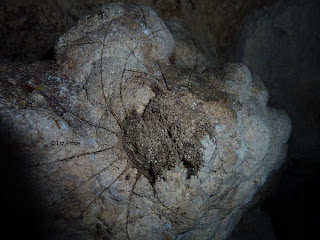
In Gua Kanthan they build their nests on the cave walls. The nests vary in size and shape.


These 2 nests are side by side

This door is slightly open


See more on Gua Kanthan and Liphistius
© Liz Price
No reproduction without permission
There are a few species of cave dwelling trapdoor spiders known in Malaysia.
In Gua Kanthan they build their nests on the cave walls. The nests vary in size and shape.


These 2 nests are side by side

This door is slightly open

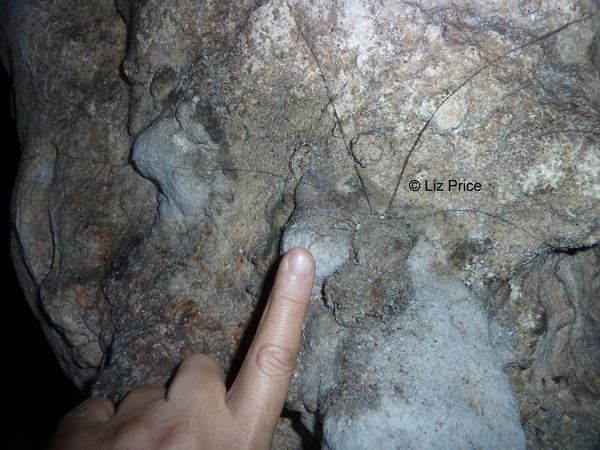
See more on Gua Kanthan and Liphistius
© Liz Price
No reproduction without permission
Gua Kanthan, Perak, Malaysia
Gua Kanthan is a large cave in Perak, Malaysia. It is located in Gunung Kanthan which is the northernmost limestone hill in the Kinta Valley.

I revisted the cave in Nov 2011 after an absence of 8 years. It was also my 8th visit to the cave.

The normal route up to the cave was "blocked" by water from the nearby pond so I found a different way up, via the abandoned temple up on the hill. This photos shows the temple in 1997

I managed to easily find the cave and Jan took this photo

The entrance is very impressive with some nice fluting.

The cave is also called Cathedral Cave due to its size. The main cave is a large single chamber with a river running through. However there is no need to get wet as the route through the main chamber is above the water level.
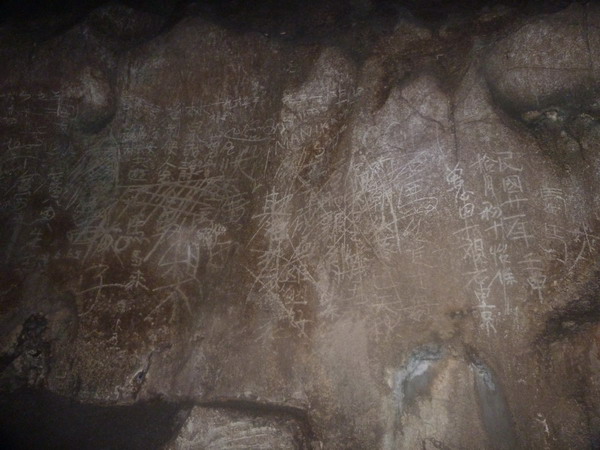
There is graffiti

Going down a climb

At the place where the river crosses the chamber, the way on is by traversing a ledge

At the next part of the chamber we were slightly too late to see the sunbeam - these pictures are from 1993 !

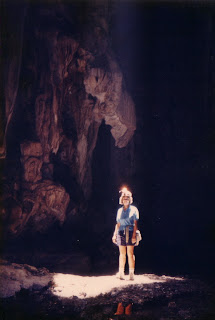
There are some nice gour pools just beyond, Jan took this photo
 and a view of the flowstone

The cave is home to a trapdoor spider, Liphistius kanthan, which is found nowhere else in the world.
Looking back up towards Gua Kanthan

Gunung Kanthan is heavily quarried. The cave is on the south end, in a currently untouched area.

Gua Kanthan register number Prk 47/02.
See more on Liphistius kanthan and the Kanthan quarry.
© Liz Price
No reproduction without permission

I revisted the cave in Nov 2011 after an absence of 8 years. It was also my 8th visit to the cave.

The normal route up to the cave was "blocked" by water from the nearby pond so I found a different way up, via the abandoned temple up on the hill. This photos shows the temple in 1997

I managed to easily find the cave and Jan took this photo

The entrance is very impressive with some nice fluting.
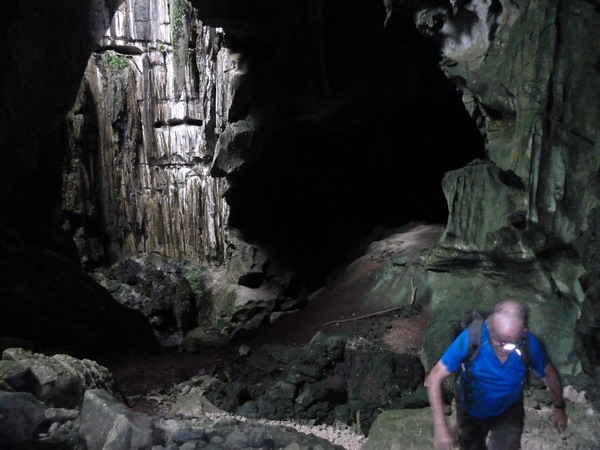
The cave is also called Cathedral Cave due to its size. The main cave is a large single chamber with a river running through. However there is no need to get wet as the route through the main chamber is above the water level.
There is graffiti
Going down a climb

At the place where the river crosses the chamber, the way on is by traversing a ledge

At the next part of the chamber we were slightly too late to see the sunbeam - these pictures are from 1993 !


There are some nice gour pools just beyond, Jan took this photo


The cave is home to a trapdoor spider, Liphistius kanthan, which is found nowhere else in the world.

Looking back up towards Gua Kanthan

Gunung Kanthan is heavily quarried. The cave is on the south end, in a currently untouched area.

Gua Kanthan register number Prk 47/02.
See more on Liphistius kanthan and the Kanthan quarry.
© Liz Price
No reproduction without permission
Subscribe to:
Posts (Atom)