sign in a cave in Laos

13 July 2008

Battambang Caves 1 - Phnom Sampeu 2008

During our caving expedition in June 2008, we stayed in Battambang in northwest Cambodia and drove out to the caves each day. Although the distances are not huge, travelling time was very long due to the appalling road conditions.

In 2004 the road from Battambang to Phnom Sampeu and onto the Thai border at Pailin was in terrible condition. So in 2008 I was surprised to see it still in a bad state. It took almost an hour to cover the 14 km to Phnom Sampeu. The road is very potholed and is dusty in the dry and full of small lakes in the wet.


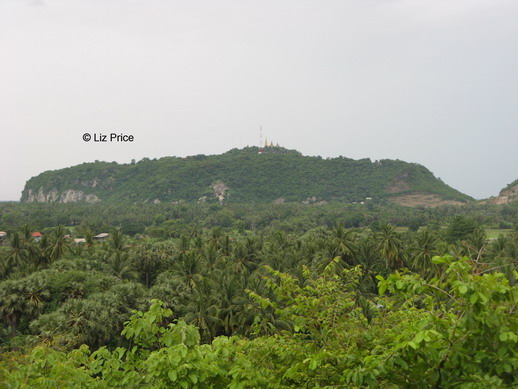
Phnom Sampeu is the famous hill which contains the killing caves and is on the tourist itinerary. It is a striking limestone outcrop with a wat on top.


At Phnom Sampeu tourists walk up a long and winding road, which initially brings them to the killing caves. This is where adults and children were pushed off the cliff top to fall down to the cave entrance. Some were bludgeoned or knifed before they were pushed, but many survived the fall and endured lingering deaths from starvation, thirst and injuries, as other bodies piled onto them. This was during the gruesome days of the Khmer Rouge massacres. An estimated 10,000 fell to their deaths here.

When I returned in 2008 I was quite shocked to see the numbers of new Buddhas, shrines, stupas etc that had been built in the last 4 years. Everywhere there were notice boards announcing how much people had donated. I was quite staggered at the amount of money that had been spent, considering Cambodia is such a poor country and many people have to survive on maybe US$3 or less a day.
Walking up the hill
 Baby Buddha
 Wat Mereoum
 torture room
 Bones in the adult killing cave


 Cave entrance

Picture of people being pushed off the cliff

 Theatre Cave -


 stupa for bones -
 New Buddha, human bones


 view to Crocodile Mountain


 donations please
 path to the top


 German field gun


 Diamond or Vishnu cave, with many steps down


gecko
 out the back door
 wat at summit of hill
 apsara


 stick insect
 Wind Cave

They are also building a huge Buddha in the cliff by the car park


Bat Cave

There are 6 more albums on the Battambang caves Caves 2 sdao area and Caves 3 crocodile hill area and Caves 4 kampong poi area and Caves 5 phnom kdaong and Caves 6 Banan area and Caves 7 kpg poi lake area and also Cambodian cave fauna.

-------------
© Liz Price
No reproduction without permission

9 June 2008

Batu Maloi - Star 2004

The cave that wasn’t
By Liz Price

Originally published in The Star on Saturday March 27, 2004

When is a cave not a cave? That of course depends on whom you ask. Generally a caver will say a cave is a natural opening in rock big enough for a human to enter. Most caves are in limestone formations. So I was sceptical when I kept coming across tourist leaflets which described a cave in Negri Sembilan as being 1km long.

I knew there were no limestone outcrops south of Kuala Lumpur, and I couldn’t imagine that there could be such a long cave that Malaysian cavers hadn’t heard of.

There was only one thing to do to satisfy my curiosity – go and investigate.

I found a willing victim – sorry, volunteer – to accompany me. My friend Mick is not a caver but I told him he could enjoy the day out in a forest reserve and wait in the sunshine while I explored any cave I might find.


The writer wading through the rush of water between boulders.


Pinpointing the location

So one bright morning we set off for the wilds of Negri Sembilan.

According to the tourist leaflets, the Batu Maloi Cave was in the Kampung Tanggai Forest Reserve in the Johol sub-district, 35km from Kuala Pilah. But they neglected to say in which direction from Kuala Pilah, and didn’t mark the reserve on the map!

Another write-up said the cave was 10 minutes from Johol and 30 minutes from Tampin. Well, at least from this I could roughly pinpoint the position.

I assumed the 10 minutes was by vehicle rather than by Shank’s pony.

We set off from Kuala Lumpur to Seremban, and then turned onto the Rembau road. From Rembau we went left onto the Johol road, and climbed up and over a big hill, which was covered in virgin rainforest.

The 884m Gunung Rembau was on our right. It was sad to see the forest alongside the road being cut, presumably for road widening. As we sped down the hill from the summit, there was a police roadblock at the bottom. I think the police were surprised to see two Mat Sallehs on this country road and just waved us through.

As we reached Johol and headed for Tampin, I made a note of time and distance, so I could estimate roughly where Batu Maloi was. After some time, I thought we had overshot.

So I stopped and asked some workmen, and we went back to Renggoh and turned off by the school. Six kilometres down this road, we finally saw a sign to Gua Batu Maloi.


A cluster of fragrant blossoms belonging to the Saraca, a common riverine tree.


Granite, not limestone

There were cows ambling down this lane and they made no effort to get out of the way, not expecting visitors mid-week. The lane ended near a surau, at a pleasant campsite situated by the river.

A signboard announced that there was indeed a cave, and as I suspected, it was of granite. The board also highlighted the dangers of caving.

We followed the path into the campsite and then got a bit confused as to the way on. We chose a trail which followed the river. We came to a junction after a short while, and I saw a few large boulders by the water.

This looked like the start of the so-called cave and an arrow marked the way in. But neither of us wanted to get our feet wet this early on, so we elected to take the forest path, to see where it went.

It meandered gently uphill, and after a while we noticed a very pleasant smell, which reminded us of honeysuckle. Looking round for the source, I noticed some orange flowers high in the tree canopy.

Then we spied a few flowers closer to us, almost at ground level. This orange blossom belongs to the Saraca, which is a common riverine tree. Although the individual flowers are nothing special to look at, together they provide a bright orange canopy, and their scent is very nice.

Impressive monolith

I was keeping an eye out for leeches, as this was ideal territory for them. Luckily they didn’t seem very abundant. This suggested there weren’t many mammals around in this area, and indeed we saw none, not even monkeys.

We came to a dilapidated wooden shelter later. I wondered who had had to carry all the materials up here to build the shelter, which had fallen apart through neglect.

Nearby was a huge granite boulder. This isolated monolith was about 8m high and 15m long. It was a very impressive sight.


The writer's friend Mick gets dirty scrabbling up and down some muddy slopes.

Mysterious creature?

After a while the trail began to descend. We soon reached the river, and I could see we were above the start of the cave. We decided to continue upstream for a short while, just to explore. We stepped into the clear water and paddled upriver. In this way we got rid of the few leeches that had attached themselves to our feet. Birds were singing on either side of us, and the sun shone brightly though the thick foliage of the tall trees.

We came across another cluster of Saraca trees with the same sweet scent. There were fallen logs covered with bracket fungi. At one point we saw an animal’s footprint in the mud, and were very puzzled as we only saw one print. What mysterious creature had left it?

Frogs plopping

The shady spot under the Saraca trees would have been an ideal place for a picnic, but we had nothing with us. So it was time to turn round, and go and investigate the cave at the huge boulders situated in the riverbed. Arrows painted on the rocks marked the way through, although in fact there was only one route here.

This section of cave was a mere 15m long, and had natural light filtering through. Mick, my friend, however decided he would go around the outside and meet me at the other end.

I soon popped out of the first section of cave and plodded downstream to the next set of boulders. Here the cave was a bit narrower and I was glad to have my torch.

A rope showed the way through, and I found the first section had quite deep water. The rush of water between the boulders and the plop of frogs as they jumped into the water when I disturbed them was quite atmospheric.

In the next part, I decided the water was possibly too deep to keep my daypack dry, so I hauled myself up and over some huge boulders and carefully inched my way across the top and down the other side.

Somehow I managed to slip the last few feet and landed in deep water. Luckily I managed to keep my camera dry.

It was fun negotiating this natural obstacle course. It was as if some giant long ago had been playing marbles with these huge stones, and had lost interest and left them scattered in the river bed.

I went through the final section of cave, and found Mick waiting for me on the other side. He had managed to get rather dirty, scrabbling up and down some muddy slopes. We had both had fun.

As suspected, Batu Maloi wasn’t a cave in the true sense of the word, but it was an interesting place and worthy of a visit.

Climbing up Batu Caves Hill - Star

No pain, no gain

By Liz Price

THE STAR Lifestyle
Saturday June 12, 2004

Everything I didn’t like was attracted to me that afternoon. The mosquitoes were pestering me. The sweat bees were buzzing around me, and ants and seemed to occupy every branch I grabbed hold of. The sharp rattan endeavoured to entangle me while jagged limestone rocks stood waiting to cut me should I fall against them. Thankfully, we didn’t see any leeches.

No, we were not in some remote jungle. We were at Batu Caves, just a mere 12km from Kuala Lumpur.

Every now and again, a few like-minded souls give up the comforts of their home to spend a day exploring this sometimes inhospitable terrain. Our goal – new caves. And surprisingly, there are new caves waiting to be found, even as close as KL. Batu Caves hill is an ideal place to look.


The climb was tough, but the group persevered and found the 'prize' -- the cave entrance.

Despite the heavy development that has taken place around the hill, and the Temple Cave at Batu Caves being such a popular tourist site, the hill itself is seldom visited. The lower cliffs are well-known to rock climbers who often scale those limestone faces. But very few people go up the hill.

The terrain is not a place for the unprepared or inexperienced. We started our adventure by packing tons of gear into rucksacks. Did we really need to take so much stuff? Luckily for me the younger guys were true gentlemen and carried most of the heavy communal equipment such as ropes and climbing hardware. We had to take it, because if we did find a cave, we would need to use that equipment.

We set off, and within five minutes reached a large swamp.

“This wasn’t here last time,” remarked someone in our group.

A couple of guys battled their way through the undergrowth in an attempt to make a large detour around the swamp, but I decided that was a waste of energy, so ploughed straight through the water. I wasn’t happy about getting my feet wet right at the start of the trek, but it was a much simpler route.

We then started climbing up the hill, my feet squelching with each step. The trail rose steeply and soon we hit an area of scree, so we had to take great care that we didn’t knock any stones down onto the person below.


Abseiling down the dark cave.

At one point, we came very close to the cliff edge and had a good view of down below. We plodded on, upwards, the trees sheltering us from the hot sun. But before long we were all pouring with sweat. It seemed to take ages to reach level ground where we normally stop and rest.

I was thankful I wasn’t carrying all that heavy gear. I put my hand on a branch to steady myself whilst I took a breather and after a few seconds realised I had a swarm of red ants running up my arm. In an effort to shake them off, which was virtually impossible, I lost my balance and grabbed hold of the nearest tree. But this was no ordinary tree, it had thorns all up its trunk. I don’t know which hurt more, the ant bites or the thorns.

I nursed my bites and wounds whilst the rest of the group puffed and panted their way up the hill. Once we had a rest, we tackled the next section.

We had a brief respite on the downhill stretch, but I knew this would be short-lived as our general direction was upwards. We came into a valley of pandan. The pandanus or screwpine is familiar to most Malaysians, but probably seen from the safety of a few metres away. We were surrounded by them.

The leaves are long and very stiff with spines along the edges. They are like swords, waiting to scratch the unwary limb. We went carefully through this section, careful not to come into contact with the leaves.

We climbed up and up. We lost the trail for a while so our group split up in various directions looking for the right route.

The guy in front of me then got entangled in some rattan. It took hold of his rucksack in its thorny embrace and securely ensnared him. He asked me to disentangle him. I couldn’t. I didn’t have gloves and the thorns were so closely placed, I couldn’t grasp the stem without getting pierced. Rattan has vicious thorns, used to claw their way up the forest towards the sun. We had to wait for the next person to arrive with a parang, and cut the offending creepers off.

Our next rest was in a scenic area, but rather uncomfortable as there was nowhere flat to sit. We had emerged half way up the side of a hidden valley which was full of large limestone rocks nestled amidst a riot of green vegetation. We tried to enjoy the scene, but the mosquitoes were a real pain, with their irritating attempts to bite. I was using repellent, but it didn’t last long on sweaty limbs. The sweat bees also came to feed, I don’t mind these insects as they don’t actually bite, but they do tickle.

We had to go very carefully on the next section as there were numerous razor sharp limestone rocks, many of which were loose. These are always tricky to negotiate as you have to be careful. The slightest slip and the rocks could easily slice open your leg.

I was just starting an awkward climb of about 5m when I was startled by a familiar sound – my handphone started ringing. Needless to say I didn’t answer it, as my hands were busy hanging onto the rock face. But it was good to know that we could still use the phone, in case of emergency.

We were all rather quiet and subdued. I think the effort of climbing this hill was taking its toll and sapping our energy. At the back of my mind was the fact that if we didn’t find the cave entrance we were searching for, we might have to retrace our steps and walk all the way back down the hill. We were hoping to avoid this by finding a particular entrance, which should lead into Dark Cave, a place we were all familiar with.

Another small hidden valley appeared in front of us, and the leader sensed that we were near our goal. I was relieved and sat down to take some photos whilst a couple of men went off to scout around.

It was music to my ears when I heard that the entrance had been found. I quickly summoned the energy to navigate the last section, and began to slip and slide my way down a steep slope to join the others.

Ahead of us was a satisfying sight – a hole in the ground. We emptied our packs and sorted out the gear, then carefully belayed the rope and threw one end down the hole. We were not sure this was the right hole, but there was only one way to find out. We strapped on our climbing equipment, then the leader clipped onto the rope and abseiled down into the bowels of the earth.

He disappeared from sight, and it was some time before we heard his muffled shouts from the depths below. It was difficult to make out what he was saying, but we eventually deciphered his echoing mumbles. It was the right hole. I was so relieved. This abseil through the cave would take a few minutes, compared to a few hours if we had trekked back down the hill.

We were told that the next man could go down, so he attached himself to the rope and disappeared. Then it was my turn. I wasn’t sure how long the abseil would be. So I took a breath, stepped over the edge, and found myself dangling in mid air. Far below me I could see the light of the second man.

I’ve always enjoyed abseiling, although sometimes it’s a bit disconcerting in total darkness. As I approached the light of the guy below, I realised there was only one person, and the other light was far below. I landed on a steep slope, and learnt I was only half way down. We had to rebelay the rope at this point.

All in all it, was an abseil of about 85m. Quite an impressive drop, and the longest I had done for a few years. A fun way to end the day. It had been a long, hot, tiring afternoon, but a satisfying trip. As far as we know, we were the first people to have done this abseil so it was worth all the discomforts from those ants, thorns and sharp rocks.

Bats are our friends

Bats are our friends

By Liz Price

THE STAR Lifestyle
Saturday, February 22, 2003

Did your mother ever warn you to be careful when walking at night, to make sure a bat doesn’t fly into your hair?

Have you heard the expressions “bats in the belfry” or “blind as a bat”? Did you spend late nights terrified in front of the TV watching scary films of bats attacking humans? These are some of the misconceptions we humans have about bats.

Bats are our friends. This is how we should consider those nocturnal mammals that fly in the dark.

Sadly, bats have a bad reputation amongst the general public and have suffered bad press – both literally and figuratively. This negativity has been around for hundreds of years.

They don’t bite necks

Bats so often appear in horror films, as evil creatures of the night. Everybody knows about Dracula, in which blood-sucking vampires appear out of the dark crypts in the old haunted castles of Transylvania.

Actually, vampire bats do exist, but fear not, you will not find them in Malaysia.

They only occur in Central and South America, where they suck blood from horses and cattle. Like leeches, they do not harm their host. Their saliva contains an anti-coagulant so the bats can feed whilst the host remains unaware of their presence. I remember seeing a documentary which showed a close-up of a bat feeding from a cow’s leg, and the cow was totally oblivious.

Bats don’t get tangled in ladies’ hair, they don’t bite the necks of humans, and they are not unclean. Admittedly, they can carry rabies, but as the general public normally never comes into contact with bats, this is not a problem – rabid dogs probably present more of a danger.

Useful little creatures

Bats have many good points. They are very useful to us, especially for fruit lovers, as they help to pollinate bananas, durian and petai, which flower at night. They also aid in seed dispersal and propagation of some rain forest plants.

Bats help to control the insect population. They consume pests which would otherwise cause damage and spread disease.

In the Deer Cave in the Mulu National Park in Sarawak, an estimated one to two million bats live in that cave. Every night they fly out to feed. As each bat eats at least 10g of insects during a night of hunting, at least 10 tonnes of insects are consumed in a single night.

Can you imagine 10 tonnes of mosquitoes? This feeding results in a few tonnes of guano falling to the floor. Guano can be used as fertiliser.

In the days before modern fertilisers, guano was often used.

Medical researchers are now developing a drug which breaks down blood clots, which can be of great use to stroke victims and people suffering from thrombosis. The scientists are isolating a protein from the bat saliva which interferes with the process of blood clotting.

Villagers around the world have used bats for medicinal properties.

The following, according to V.S. Naipaul’s Among the Believers, is a local kampung cure for asthma and chest complaints : “Get some bats, take out their hearts and roast them until crisp. Then pound them and mix with your coffee and drink twice a day.”

Some Cambodians believe that fruit bat soup is a good cure for heart trouble and asthma.

There is a profitable trade in these winged mammals. The head is cut off for traditional medicine, the blood is mixed with rich alcohol, and the meat is used to make rice soup.

In one village in the Indian state of Maharashtra, bats are welcome for their therapeutic powers. All around temples are stalls selling bottles of bat oil which is supposed to work wonders against rheumatism and arthritis.

It’s made of bat’s fat and a small amount of blood mixed with coconut oil and camphor. A small amount of this ancient essence rubbed on the body is said to work wonders.

The incredible flying mammal

The bat god figured prominently in the mythology of many different cultures of Mexico more than 2,000 years ago. The bat, because of its association with the night and its silent flight, represented death.

Bats belong to the taxonomic order Chiroptera. Worldwide, there are more than 900 species of bats.

The United States is known to have 40 species of bats, whereas England only has 15. In Malaysia, there are about 100 species. There are two main types of bats, the insect feeders and the fruit bats.

Bats are the only mammals which can fly. Like many other mammals, they have fur, and give birth to live young. Individuals can live up to 20 years. Bats have been on the Earth for about 50 million years.

There is a popular saying “as blind as a bat”. In fact, bats are not blind. Fruit bats rely on their eyesight to navigate.

Insect-eating bats have very small eyes in comparison and navigate by echo location.

Bats are mainly nocturnal and hang upside down in their roosts. They roost in buildings, caves, hollow trees, foliage, crevices in rocks, and in spaces under the bark of trees. Some make tents out of the leaves of plants, others roost in the hollow stems of bamboo, having entered the stems through holes made by wood-boring beetles.

Many bats throughout the world roost in buildings and are often a considerable nuisance. Species that roost in caves, trees, or buildings often form huge colonies.

Flying foxes are the biggest bats, and sometimes can be seen hanging in trees where they roost, seemingly undisturbed by sunlight.

Sadly, their numbers are dwindling. Their populations have been decimated by habitat destruction, colony eradication by fruit growers, over-harvesting for human consumption and unregulated hunting (for food and sport).

Some species are becoming extinct and this could have adverse affects on the many bat-dependent plants and the ecosystems they support.

Save the bats

Bats need protection. Increased awareness of the vital role these bats play in the life cycle of commercially important plants is necessary.

In some countries, bats receive protection. For example, in England, all bats are protected under the Wildlife and Countryside Act and there are heavy penalties for harming or even handling certain species.

In the US, 50% of its bat species are on the endangered list. However in Peninsular Malaysia, only flying foxes are partially protected under the Protection of Wildlife Act 1972 but even these can still be hunted for food by those with a licence.

In Sarawak, all bats are protected. So remember that bats are actually our friends, and we need them in our ecosystem.

They will not harm you, so please do not harm them.

Caving at Gua Musang - Star

Surprises aplenty caving

By Liz Price

THE STAR Lifestyle
Saturday July 15, 2006
[also on All Malaysia]


There are two popular stories, and both relate to the huge cave in the hill behind the town. One account says that a group of superstitious hunters were camped out here, when a storm destroyed the hunters’ attap huts. A bolt of lightning struck the hill and almost split it in two.

The hunters thought the guardian spirit of the cave was angry and begged for mercy. As they prayed they saw a pack of civet cats run into the cave, so they lay in wait for them to come out again. However, the animals never reappeared. The hunters then named the hill Bukit Gua Musang and the town, Gua Musang.

The second story refers to a rock formation inside the cave, which reportedly resembles a civet cat, hence the name.

Today, this famous cave in Gua Musang, Kelantan is a fairly popular attraction. When we, a group of cave explorers from the Malaysian Karst Society, went up for a weekend recce, we were pretty sure we would see no signs of musang here.


The entrance to Gua Musang. — Pictures by LIZ PRICE

But imagine our surprise when one in our party went into a small passage in the cave and came face to face with a furry creature. At first we assumed it was a civet, but it turned out to be a porcupine. The porcupine was also startled and disappeared into a small dark hole.

The cave of Gua Musang is located immediately behind the town’s railway station and is reached by a steep scramble up the hillside. We got some funny looks for our caving helmets and lights, and our muddy clothes.

After a steep climb following the track up the hill, which was slippery from a recent shower, we reached the cliff face and saw a small slot. This is the cave entrance. The main cave chamber is huge, but the entrance passage is a very narrow ascending rift. There is an amazing amount of graffiti adorning the walls of the entrance chamber – it’s a shame that so many were so thoughtless in defacing the cave.

Inside the cave, we found lots of wings belonging to Atlas moths strewn around the floor in some places. Probably the porcupine had eaten the moths, leaving just the wings. We explored all the passages we could find. The chamber goes through the hill to a back entrance and you can climb up to the top of the hill, but we felt it was a bit dangerous to attempt it as the ground was slippery.

The next day we ventured out to Pulai. Pulai, south of Gua Musang, is an old gold mining area. It is said that Pulai was founded in 1425 by two brothers, Lim Pak Yen and Lim Ghee Yee, who fled China.


A narrow passageway that holds a surprise.

The brothers came here in search of gold. Once word got out, there was a gold rush and a small settlement was created. As the gold supply slowly diminished, people started planting padi to survive.

Pulai has a temple reputed to be 400-500 years old, reportedly the second oldest temple in the country after the Cheng Hoon Teng temple (1646) in Malacca. The Pulai Swee Nyet Keung Buddhist temple and its surrounding village was burnt down by the Japanese in 1941.

The temple was rebuilt in 1970 and is quite small, but it has an interesting collection of ancient cannon parts.

Across the river from the temple is a limestone hill with a new temple. Bukit Tok Cu is also known as Princess Mountain and a temple is being constructed on top of it. The workers told us that a man had a vision of steps being built up the hill in 1984, but work on the temple only started in 1997.

However, a shrine was already in existence in the upper cave when an archaeological team dug there in 1991. The upper part of the cave is not very extensive but we were able to look straight down some open shafts to the cave chamber back down at ground level. We couldn’t see any obvious way down so we retraced our way down the steps and entered the main chamber at ground level.

Looking around, we found an easy climb up inside the cave and found ourselves back in the new temple again, much to the surprise of the workers.

We had our base in Taman Ethnobotani, where there are rooms and chalets for rent. The park was set up in 1997 for the collection and propagation of medicinal herbs. This recreational and nature park is administered by the Kelantan Selatan Development Authority (Kesedar).

Some 3km from Gua Musang, the park covers 38ha of lush greenery and limestone outcrops. One small hill is located right at the entrance of Taman Ethnobotani, and here we got to watch climbers practise their moves.

The park holds many climbing routes. Apart from climbing, there are other outdoor activities like rope and wooden obstacle courses, and flying fox and abseiling. Visitors can also learn to make traps and pick up jungle survival skills. Nature lovers will enjoy visiting the deer and ostrich farms and the medicinal herb garden.

Gua Musang has three limestone hills that run parallel to the main road leading into town. One was burnt by a fire last year, and its odd appearance with the patchy vegetation growing back made it look like a mangy dog. And that’s what we called it: Mangy Dog Hill.

Most of the Gua Musang limestone hills house caves, but they tend to be quite short. Gua Madu, located on the edge of town, is now in a recreational park. Further away in the Sungai Nenggiri area are the famous archaeological caves like Gua Cha, Gua Peraling and Gua Chawan.

The Nenggiri is also a place for white water rafting.


Taman Ethnobotani
KM3, Jalan Persiaran Raya
Gua Musang, Kelantan
Tel: (09) 9126829

Gold mine in Negeri Sembilan - Brunei Times

This article was published in The Brunei Times.
© Liz Price  .  No reproduction without permission

For more photos see gold mine .

Looking for gold and finding bat poo

Seeking adventure: The writer at the entrance to the cave.Picture: The Brunei Times

Sunday, June 8, 2008

WHEN I heard there was an old abandoned gold mine in Negeri Sembilan in Malaysia, I wanted to take a look as I have an interest in caves and mines. I knew there would be no gold lying around for the taking, but I was curious to see the site.

According to a newspaper report, the locals want to turn this mine into a tourist attraction and they claimed the tunnels extend 80 kilometres. I knew this was not possible but could find very little information about the place except that it was worked many years ago. I didn't even know if the tunnels are still accessible. We drove to Tampin which is south of Kuala Lumpur and then headed to Air Kuning as I knew the mine should be in that area. Of course there was no sign of it so we asked some locals and luckily found someone who knew the mine. When I mentioned I was a writer for a newspaper, he seemed pleased and immediately called a friend and asked him to lead us to the mine. Halim and his two sons took us to a rubber plantation, and having parked the cars, we set off on foot, soon being attacked by mosquitoes. After just a few minutes walk we arrived at the entrance to one of the tunnels. We all went into the entrance chamber and could immediately hear the sound of hundreds of bats. It was also apparent we would need shoes and torches, so we went back to the car to get prepared, saying goodbye to Halim who didn't want to join us, even though he had never been in the mine before.

Back inside we realised we had a choice of two passages. Both were wet with dubious looking muddy water so we chose one and plunged in. Luckily the water was initially only ankle depth. The Bomba or fire department had been here recently for a tour, and had left plastic tape marking a route through the tunnels, and closing off some passages. So we followed their path. As we ploughed through the water we stirred up a foul smell which reminded me of human sewage and was unlike anything I'd ever smelt before in a mine. I hoped it was just natural impurities in the water.

The tunnels are now home to hundreds of bats and they were flying all around us, disturbed by our presence. As the tunnels are not much larger then ourselves, a few of the bats collided with us in their attempts to pass us. Since there was a network of passages the bats were soon able to get out of our way. The bats are harmless and there was no need for us to be frightened of them.

The rock seemed quite soft and there was little sign of how the miners dug out the passages. Halim had told us the mine closed down by the Second World War and had been worked by the British. The tunnels were of uniform size. In a few places there were shafts leading down to lower levels, and some going up to daylight. After walking around for a short time we came back to the entrance chamber, having done a circular trip. So we decided to go back in and this time check out some of the passages taped off by the Bomba. This was actually far more pleasant as the water was cleaner and less muddy and that awful smell disappeared. I reckon it was due to having dozens of feet passing through recently which had stirred up the mud and sediments, including the bat poo in the water!

As we walked through I wondered what life was like for the miners who worked here. As none of the passages seemed far from an entrance or an open shaft, the air was fresh. I'd heard that the miners transported the ore out by rail, but now there is no sign of any rail tracks. When we emerged out from the mine our shoes were plastered in mud so we went down to the nearby stream to wash. Then we climbed the hill above the mine and found lots of shafts had been dug. Some were just trial holes, whereas others led down into the mine below, and we could see bats flying underneath our feet.

It had been an interesting visit, to see the old workings of this historical site. It is good to know that bats have taken up residence, as bats are important to humans, as they control the insect population and help to pollinate fruits and other crops. Despite the mud, it had been a fun day.

The Brunei Times


8 June 2008

Trekking Northern Laos - Star 2006

Trekking Northern Laos

By Liz Price

THE STAR Lifestyle
Saturday March 11, 2006


The hillside was so steep that I had to pull myself up using any available tree branch or root. The terrain underfoot was slippery as the carpet of dry bamboo leaves provided no grip. It was actually more difficult than walking on mud.

The local guides, however, just sped up the hill in their slippers as if it was a Sunday stroll.

And, of course, there were leeches, even though it was the dry season. Actually, I don’t mind leeches. Often I don’t feel the bite. It’s only when I find a bloody patch on my socks that I realise I have been “leeched”.


A jungle lunch — Pictures by LIZ PRICE

We were in northern Laos, close to the Chinese and Myanmar borders. We had our base in the small town (or more accurately a large village) of Vieng Phoukha, on Route 3 in Luang Namtha province. Very few tourists venture up here as they generally concentrate on Vientienne and Luang Prabang, a World Heritage Site.

However Luang Namtha will soon open up to the world as China and Thailand are constructing a highway through the area. Due to the construction, the journey was incredibly dusty. Our rucksacks on the roof of the pickup were the same shade of red-brown and covered with about a millimetre of dust by the time we arrived!

We had entered Laos from Thailand. From Chiang Rai we went to the border town of Chiang Khong and took a ferry across the Mekong to Huay Xai. Immigration was a breeze as we got our visas on arrival. It then took 3½ hours to do the 120km of dusty track. Vast swathes of terrain had been cleared as earth-moving machines ate up the land and cleared steep hillsides.

At Vieng Phoukha, we went to the Eco-Guides office to arrange a trek. This is the newest trekking area in Laos, and the Eco-Guides service is a community-based scheme that currently offers four treks that stop at various ethnic villages like the Akha, Hmong and Khmu.

We began by crossing dry paddy-fields, where we met three girls carrying nets and baskets and hunting small animals.

Our first obstacle was crossing a small stream using bamboo poles. Three poles spanned the stream and each one bounced to different degrees as you stood on them, which was a bit unnerving. We then entered the forest and began an uphill climb and followed a trail alongside a small river when we heard a banging sound. Our guide said it was rice-pounding machines.


Tough terrain.

Intrigued, we went to have a look. We saw bamboo pipes attached to a large wooden pounder above a pile of rice. When the pipes are filled with water they tip down and force the pounder onto the rice.

Throughout, our guides pointed out various leaves and shrubs used for medicine and food. When lunchtime came, a guide cut several banana leaves and laid them on the ground. Another unpacked the food, while others disappeared and came back with an assortment of ferns and leaves. These we ate with sticky rice, vegetables and Laotian sambal.

That evening we stayed in a Khmu village. We arrived in the late afternoon and went down to the river to wash. Later, as we sat around under the house waiting for dinner, lots of villagers came to sit and watch us.

As soon as the sun went behind the hills, it really cooled down and I huddled by the small fire. We were given plates of pumpkin to snack on. It tasted good. After what seemed hours we were called to dinner.

The houses had no furniture, so we sat on the floor. A blue plastic sheet had been laid down and covered with banana leaves. Piles of sticky rice were served, then different dishes of vegetable, chicken and bowls of chicken bone soup.

We had bought a pig for dinner, but all we were given were small piles of fat and no meat.

The village headman gave a blessing and we had to toast him with lao lao, a local rice whisky.


Hmong people.

The people here are all animists and a bit superstitious. We were told not to pass straight through villages, that we should stop and chat, otherwise the villagers might think we were evil spirits.

The next day we went to a cave, whereupon the guide asked for permission from the cave spirit to enter. The cave, Tham Nam Eng, had some very large chambers and passageways and lots of beautiful stalactites and stalagmites.

Over the two days, we visited three different villages, Akha, Khmu and Lahu, but different tribes will sometimes live together in one village so we also saw Black Hmong and Hmong Mien. They build houses of another style and, of course, their clothes are different.

The best thing about trekking here is that tourism is still new. It was a great experience to go off the beaten track and see villages unaffected by foreign visitors.